Parasitic infections can sometimes cause symptoms that are easy to confuse with other digestive, nutritional, inflammatory or infectious conditions. Some people may have very few symptoms, while others can become quite unwell depending on the parasite, where it is located in the body, the number of organisms present and the person’s immune response. Symptoms alone cannot confirm a parasite, but recognising possible patterns can help people know when appropriate testing may be worth discussing with a qualified healthcare professional.
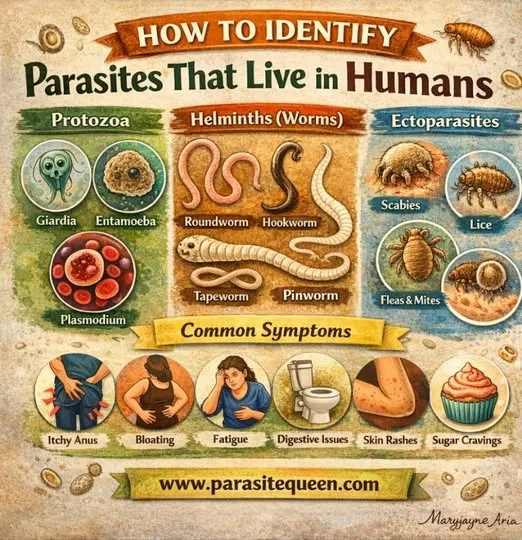
1. PERSISTENT OR UNEXPLAINED DIGESTIVE PROBLEMS: Ongoing diarrhoea, constipation, abdominal discomfort, bloating, excessive gas, nausea or changes in bowel habits can occur with certain intestinal parasites. Giardia, for example, can cause diarrhoea, abdominal cramps, bloating and foul-smelling stools. However, these symptoms are also extremely common with conditions such as irritable bowel syndrome, food intolerances, inflammatory bowel disease and bacterial infections, so testing is important rather than assuming parasites are responsible.
2. UNEXPLAINED WEIGHT LOSS: Losing weight without deliberately changing diet or activity can have many causes, but some parasitic infections can interfere with digestion, absorption of nutrients or appetite. Significant or continuing unexplained weight loss should always be medically investigated because it can also occur with endocrine disorders, gastrointestinal disease, chronic infections and other serious conditions.
3. CHANGES IN STOOLS: Persistent changes in stool consistency, frequency, colour or appearance can sometimes occur during intestinal infections. Some infections may produce diarrhoea, while others can cause alternating bowel habits or abdominal discomfort. Seeing mucus, blood, black stools or persistent changes should not automatically be attributed to parasites and may require prompt medical assessment.
4. UNUSUAL FATIGUE OR WEAKNESS: Fatigue can occur during infections, including some parasitic infections, particularly when the infection is prolonged or associated with nutritional deficiencies or blood loss. Certain intestinal worms can contribute to iron-deficiency anaemia, which may cause tiredness, weakness, dizziness and reduced exercise tolerance. Fatigue is extremely nonspecific, however, and has a very large number of possible causes.
5. IRON-DEFICIENCY ANAEMIA: Some blood-feeding intestinal worms, particularly hookworms, can cause chronic intestinal blood loss and contribute to iron-deficiency anaemia. This can present with tiredness, weakness, pale skin, headaches, shortness of breath or dizziness. Unexplained iron deficiency deserves investigation to identify the underlying cause rather than simply assuming that a parasite is responsible.
6. ANAL ITCHING, ESPECIALLY AT NIGHT: Intense itching around the anus at night is a classic feature of pinworm infection. Female pinworms migrate to the area around the anus to deposit eggs, commonly during the night. In children, disturbed sleep, scratching and irritability may be noticeable. A healthcare professional can recommend appropriate testing, such as the tape test, when pinworm is suspected.
7. SKIN RASHES OR ITCHING: Certain parasites can cause skin manifestations. For example, some infections can produce itchy rashes during migration through or beneath the skin, while others can trigger allergic or immune reactions. At the same time, eczema, allergies, fungal infections, medications and many other conditions can produce similar symptoms, so a rash should not automatically be labelled as a parasitic infection.
8. MUSCLE OR JOINT DISCOMFORT: Some parasitic infections can involve tissues outside the intestine and may cause muscle pain, weakness or other inflammatory symptoms. Trichinellosis, for example, can cause muscle pain and swelling after infection with Trichinella larvae. Persistent or unexplained muscle and joint symptoms have many possible causes and require proper clinical assessment.
9. DISTURBED SLEEP OR IRRITABILITY: Parasite-related symptoms such as abdominal discomfort, anal itching, diarrhoea or inflammation can interfere with sleep. This may result in daytime tiredness, irritability or difficulty concentrating. Poor sleep itself can produce many of these symptoms, so disturbed sleep is better regarded as a possible indirect sign rather than evidence of parasites.
10. PERSISTENT SYMPTOMS AFTER TRAVEL OR POSSIBLE EXPOSURE: A history of travelling to an area where particular parasites are more common, drinking untreated water, eating contaminated food, swimming in contaminated freshwater, walking barefoot in certain environments or having close household exposure can increase the possibility of specific parasitic infections. The type of exposure matters because different parasites have very different transmission routes and require different diagnostic tests.
WHY TESTING MATTERS: The most important point is that symptoms cannot reliably diagnose a parasitic infection. Many of the symptoms commonly attributed to parasites also occur with IBS, coeliac disease, inflammatory bowel disease, food intolerances, bacterial infections, nutritional deficiencies, medication effects and other medical conditions. Testing should therefore be guided by symptoms, travel and exposure history, and the suspected organism. Depending on the situation, testing may involve stool examination, antigen or molecular testing, blood tests, or other investigations. A single negative test does not necessarily exclude every parasite because test sensitivity varies between organisms and testing methods.
A PRACTICAL APPROACH: If you have persistent digestive symptoms, unexplained weight loss, anaemia, prolonged diarrhoea, persistent itching or symptoms following a relevant exposure, write down your symptoms, their duration, travel history, food and water exposures, animal exposures and any medications or supplements you take. Take this information to a qualified healthcare professional and ask whether parasite testing is appropriate. Avoid taking antiparasitic medication simply because you have several symptoms on a list, because the correct treatment depends on the organism and unnecessary treatment can cause adverse effects or delay the correct diagnosis.
KNOWLEDGE AND AWARENESS: Parasites are real infections that deserve proper diagnosis, but good parasite awareness also means avoiding the opposite mistake of assuming every unexplained symptom is caused by parasites. Learning about transmission, life cycles, appropriate testing and evidence-based treatment gives people a much better chance of identifying genuine infections and receiving the right care.
Please share this information without making any changes to help increase awareness