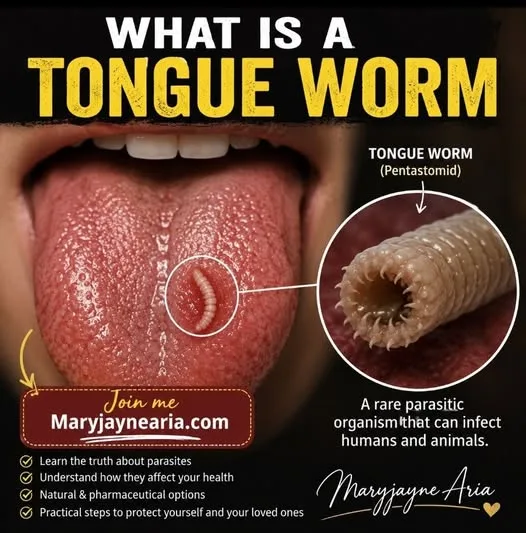
Tongue worms are among the strangest and least understood parasites known to infect animals and humans. Despite their name, they are not true worms and they do not primarily live on the tongue. Tongue worms belong to a unique group of parasitic organisms called Pentastomids, meaning “five mouths,” due to the ring of hook like structures surrounding their mouth.
These parasites have existed for millions of years and are most commonly found in reptiles, especially snakes. However, under certain conditions, humans can become accidental hosts. Human infection is rare, but documented cases have occurred across Africa, the Middle East, Asia, and other parts of the world.
What Are Tongue Worms?
Tongue worms are elongated parasitic creatures with a flattened segmented appearance. They behave more like arthropods than true worms and are biologically closer to crustaceans.
The most well known species include:
• Linguatula serrata
• Armillifer armillatus
• Armillifer grandis
• Porocephalus species
Adult tongue worms usually live inside the respiratory tract of reptiles such as snakes, pythons, and vipers. Eggs are released through respiratory secretions or feces and contaminate food, water, or the surrounding environment.
Humans can become infected by:
• Eating undercooked snake meat
• Consuming contaminated food or water
• Handling infected reptiles
• Exposure to parasite eggs in the environment
Once ingested, larvae hatch and migrate through tissues where they form cyst like structures inside organs.
Life Cycle of Tongue Worms
The life cycle is complex and often involves two hosts.
Definitive Host
Usually a snake or reptile where adult parasites live in the lungs or respiratory passages.
Intermediate Host
Small mammals such as rodents, goats, dogs, or occasionally humans.
When eggs are swallowed, larvae emerge and penetrate the intestinal wall. They travel through the bloodstream and may lodge in:
• Liver
• Lungs
• Lymph nodes
• Spleen
• Eyes
• Nasal passages
• Brain in extremely rare cases
Over time, they may calcify and remain hidden for years.
Symptoms of Tongue Worm Infection
Many people may never know they are infected. Some infections are discovered accidentally during imaging scans or surgery.
However, symptoms can include:
Respiratory Symptoms
• Chronic cough
• Wheezing
• Nasal irritation
• Throat discomfort
• Sinus congestion
• Shortness of breath
Digestive Symptoms
• Nausea
• Abdominal pain
• Loss of appetite
• Vomiting
• Diarrhea
Systemic Symptoms
• Fatigue
• Eosinophilia
• Immune activation
• Inflammation
• Enlarged lymph nodes
Complications
In severe cases, larvae may invade sensitive tissues resulting in:
• Vision disturbances
• Neurological symptoms
• Organ damage
• Secondary bacterial infections
Can Tongue Worms Live in the Nose or Throat?
Yes. Certain species such as Linguatula serrata have been reported in the nasopharyngeal region. This may produce:
• Sneezing fits
• Crawling sensations
• Excess mucus
• Nasal discharge
• Difficulty swallowing
• Throat irritation
Some patients report a choking sensation or persistent irritation that conventional medicine initially mistakes for allergies or sinus disease.
How Are Tongue Worms Diagnosed?
Diagnosis can be difficult because these parasites are uncommon and symptoms overlap with many other conditions.
Methods may include:
• CT scans
• MRI imaging
• Endoscopy
• Biopsy
• Microscopic examination
• Blood tests showing elevated eosinophils
• Histopathology
Calcified larvae may appear as crescent shaped or horseshoe shaped lesions on scans.
Pharmaceutical Treatment Options
There is no universally established pharmaceutical protocol specifically approved for tongue worm infections. Most treatment approaches are based on case reports and clinical judgment.
Medical options reported in literature include:
Albendazole
A broad spectrum antiparasitic medication frequently used against tissue parasites. It may help reduce larval burden.
Mebendazole
Sometimes used similarly to albendazole in parasitic infections involving larvae.
Ivermectin
Reported anecdotally in some parasitic protocols, though evidence specific to tongue worms remains limited.
Praziquantel
Occasionally explored when mixed parasitic infections are suspected.
Surgical Removal
If parasites lodge in the eye, throat, nasal cavity, or accessible tissue, surgical extraction may sometimes be necessary.
Medical supervision is essential because killing tissue parasites too rapidly can potentially trigger inflammatory reactions.
Herbal and Integrative Approaches
Many people interested in terrain health and integrative medicine explore herbal support alongside conventional care. Scientific evidence for herbs specifically against tongue worms is limited, but several herbs are traditionally used in parasite protocols.
Black Walnut
Traditionally used in herbal parasite cleanses due to its juglone content.
Wormwood
Historically used for intestinal parasites and digestive support.
Clove
Often combined with wormwood and black walnut in traditional protocols.
Garlic
Contains sulfur compounds with antimicrobial and antiparasitic properties.
Oregano Oil
Studied for broad antimicrobial effects.
Neem
Used traditionally in Ayurvedic medicine for microbial and parasitic balance.
Mimosa pudica
Popular in alternative parasite cleansing communities due to its sticky fiber content.
Supportive Measures
People may also focus on:
• Gut microbiome support
• Mineral replenishment
• Liver support
• Binders
• Hydration
• Immune modulation
• Reducing inflammatory burden
Prevention
Prevention remains extremely important.
Avoid:
• Eating undercooked snake or reptile meat
• Drinking contaminated water
• Handling reptiles without protection
• Poor food hygiene
• Exposure to infected animal secretions
Proper cooking and hygiene greatly reduce risk.
The Bigger Picture
Tongue worms highlight how complex the relationship between humans and parasites truly is. Many parasites can remain hidden for years, evade detection, and trigger chronic inflammatory responses without immediate diagnosis.
As global travel, exotic pet ownership, and environmental disruption increase, awareness of unusual parasitic infections may become increasingly important.
Further scientific research is still needed to fully understand how these organisms affect immunity, inflammation, and long term health.
Written for information only. This article is not medical advice.
Written by Maryjayne Aria
Author of Immune Health, Terrain & GcMAF
For more insights into how parasites impact health and what to do, visit parasitequeen.com
Join our parasitequeen information group for more insights
Parasite Queen Facebook
See my personal blog space: maryjaynearia.com
FEEL FREE TO FOLLOW ME