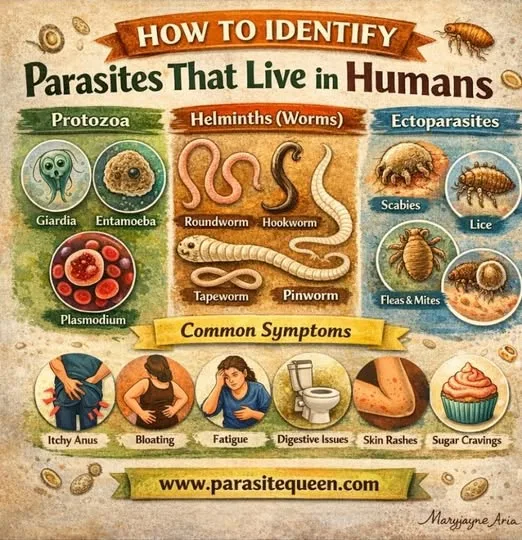
Parasites come in an astonishing range of sizes. Some are large enough to stretch for several metres inside the human intestine, while others are so tiny they can only be seen under a microscope. Despite their enormous differences in size, both large and microscopic parasites can survive by using the human body as their home, obtaining nutrients and avoiding the immune system in remarkably sophisticated ways.
Understanding the extremes of the parasite world helps us appreciate how diverse these organisms are and why accurate diagnosis and treatment are so important.
The Largest Parasite That Can Live in Humans:
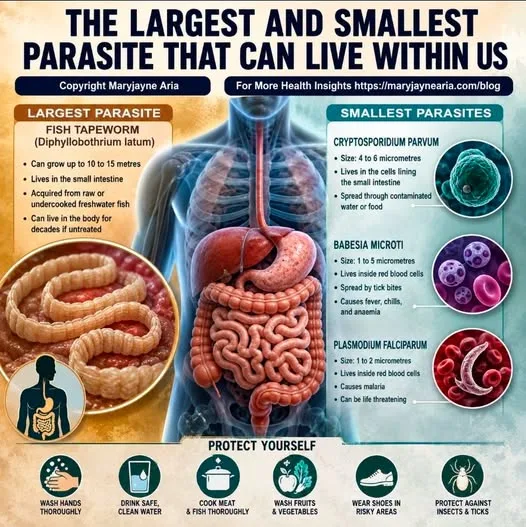
Diphyllobothrium latum, commonly known as the fish tapeworm, is considered one of the largest parasites capable of infecting humans.
Length:
• Typically 2 to 10 metres (6.5 to 33 feet)
• Exceptional cases have exceeded 15 metres (49 feet)
Where it lives:
• Small intestine
How people become infected:
• Eating raw or undercooked freshwater fish containing larval cysts
Lifespan:
• Up to 20 to 30 years if untreated
Symptoms:
• Mild abdominal discomfort
• Diarrhoea or constipation
• Weight loss
• Vitamin B12 deficiency
• Fatigue
• Anaemia
A single adult tapeworm consists of thousands of body segments called proglottids. Each mature segment contains both male and female reproductive organs and can produce enormous numbers of eggs, which are passed into the environment through the stool.
Other Very Large Human Parasites:
Taenia saginata
• Can reach 10 to 25 metres
• Acquired from undercooked beef
Taenia solium
• Usually 2 to 7 metres
• Can also cause cysticercosis when eggs spread through the body
Ascaris lumbricoides
• Largest intestinal roundworm
• Females grow up to 35 centimetres
• Males reach about 30 centimetres
The Smallest Parasites That Can Live in Humans:
At the opposite end of the scale are microscopic parasites that measure only a few micrometres.
One of the smallest is Cryptosporidium parvum.
Size: Approximately 4 to 6 micrometres
• Around one tenth the width of a human hair
Where it lives:
• Cells lining the small intestine
How infection occurs:
• Swallowing contaminated water
• Contaminated food
• Contact with infected people or animals
Symptoms:
• Watery diarrhoea
• Abdominal cramps
• Nausea
• Dehydration
• Severe illness in immunocompromised individuals
Another Tiny Human Parasite:
Babesia microti
Size: • About 1 to 5 micrometres
Where it lives:
• Inside red blood cells
Transmission:
• Tick bites
• Blood transfusions
Symptoms:
• Fever • Chills
• Fatigue • Anaemia
• Can become life threatening in individuals with weakened immune systems.
Another extremely small parasite is Plasmodium falciparum, one of the organisms responsible for malaria. During part of its life cycle it measures only about 1 to 2 micrometres while living inside human red blood cells.
How Parasites Survive:
Whether they are several metres long or only a few micrometres across, parasites have evolved remarkable survival strategies.
These include:
• Absorbing nutrients directly from the host. • Producing protective outer coverings that resist digestion.
• Altering or suppressing parts of the immune response.
• Reproducing rapidly to ensure survival.
• Moving between animal and human hosts during different stages of their life cycle.
Can Someone Have More Than One Parasite?
Yes. It is possible for an individual to carry multiple parasite species at the same time. Mixed infections are more common in areas with poor sanitation, contaminated water, or frequent exposure to parasite carrying animals and insects. Different parasites may occupy different organs, including the intestines, liver, lungs, blood, muscles, eyes, and even the brain.
Prevention:
The risk of parasitic infection can be reduced by:
• Washing hands thoroughly.
• Drinking safe, clean water.
• Cooking meat and fish thoroughly.
• Washing fruits and vegetables.
• Wearing shoes in areas where soil transmitted parasites are common.
• Using insect protection in regions where parasites are spread by mosquitoes or ticks.
Final Thoughts
The parasite world spans an extraordinary size range. The largest human parasites can grow longer than a city bus, while the smallest are invisible without powerful microscopes. Yet regardless of size, every parasite has evolved highly specialised mechanisms to survive within the human body. Awareness, good hygiene, safe food preparation, and appropriate medical diagnosis remain the best defences against these remarkable but potentially harmful organisms.