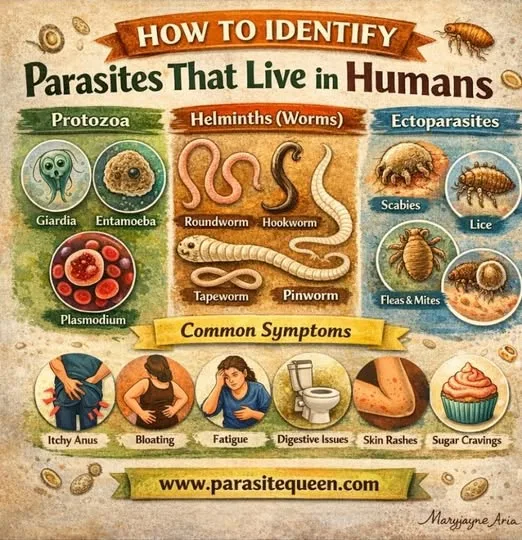
Parasite Testing:
Parasites are masters of disguise. They can live deep in tissues, organs, the lymphatic system, or even the brain. Far beyond what most stool tests can detect.
Many people remain undiagnosed because conventional testing misses parasites when they are not actively shedding. This is why multiple testing methods, combined with knowledge of parasite behavior (such as their activity during the full moon), are essential for proper detection.
Parasites often become more active and reproductive during the full moon due to changes in the body’s serotonin and melatonin levels. This makes them easier to detect and kill. Testing or cleansing during the full moon increases the chance of accurate detection and effective elimination.
I: Conventional Medical Testing:
1. Stool Ova and Parasite (O&P) Test:
Microscopic stool analysis to detect eggs or adults. Often misses parasites unless shedding is active.
2. Stool PCR Testing:
Detects parasite DNA in stool samples (e.g. GI-MAP, Genova). Better sensitivity but still limited to gut.
3. Blood Serology:
Identifies antibodies or antigens for systemic parasites (e.g. Toxoplasma, Trichinella).
4. Blood Smear Microscopy
For parasites in blood like Babesia or Plasmodium (malaria). Timing is key.
5. Complete Blood Count (CBC)
Elevated eosinophils may indicate parasitic activity. Non-specific.
6. Liver Enzymes and Inflammatory Markers:
Supports diagnosis when liver flukes or systemic inflammation is suspected.
7. Tissue Biopsy:
Used in rare cases to detect encysted parasites in organs or muscle.
8. Imaging (CT, MRI, Ultrasound)
Useful for detecting cysts or masses from tissue parasites (e.g. liver flukes, Taenia solium).
9. Urine or Saliva Antigen Tests:
Emerging tests for parasite markers in fluids. Still uncommon.
10. Toxoplasmosis IgG and IgM tests are valid blood-based serology methods used to detect infection with Toxoplasma gondii, a common tissue-dwelling parasite.
IgM positive suggests a recent or active infection.
IgG positive indicates a past exposure or latent infection.
II. Functional and Integrative Testing:
11. EAV (Electroacupuncture according to Voll)
Measures energy flow through meridian points. Non-invasive. Can detect parasite stress in specific organs.
12. Bioresonance Testing:
Uses electromagnetic frequency responses to detect pathogens. Widely used in holistic clinics.
13. Autonomic Response Testing (ART)
Advanced muscle testing by Dr. Klinghardt. Includes detection of hidden infections using filters and light.
14. Applied Kinesiology (AK)
Manual muscle testing for parasite-related stress or weakness.
15. Live Blood Analysis (Dark Field Microscopy)
Examines living blood under a microscope. May show parasite forms or immune stress.
16. Thermography:
Detects abnormal heat in inflamed or infected areas. Supportive. Not specific.
17. NLS Biofeedback (Metatron/Hunter)
Scans organs for parasite frequency signatures. Used in Europe and Russia.
18. Vega Testing:
Electrical conductivity testing using parasite test ampoules. Related to EAV.
19. Resonance Vial Testing:
Vials containing specific parasite frequencies used in energetic testing.
III. Observational Methods:
20. Full Moon Testing or Cleansing:
Parasites are more active during full moons due to hormonal shifts that affect their nervous system. Testing or cleansing during this time increases accuracy and success.
21. Challenge Test with Herbs or Drugs:
After taking anti-parasitic agents, retesting or observing stools may reveal hidden infections.
22. Symptom Tracking:
Chronic fatigue, teeth grinding, food cravings, rashes and digestive issues may point to parasites.
23. Therapeutic Trial:
Improvement on a parasite cleanse may be used as confirmation when tests are inconclusive.
24. Hair Analysis:
Sometimes used to assess toxin or mineral levels that may indicate parasite burden indirectly.
Tips:
For best results, test 2–3 days before and after the full moon. Parasites are most detectable during this window.
Here is a list of doctors and practitioners who test for parasites:
1. Infectious Disease Specialists:
Trained to identify and treat parasitic infections, especially in complex or systemic cases.
2. Gastroenterologists:
Focus on digestive parasites and commonly order stool and colon-related tests.
3. General Practitioners (GPs)
Can initiate basic stool tests and blood work but may refer to specialists.
4. Tropical Disease or Travel Medicine Doctors:
Expert in parasites contracted from international travel or tropical regions.
5. Functional Medicine Doctors
Use advanced testing like PCR stool panels, GI-MAP, and bloodwork combined with detox protocols.
6. Integrative and Holistic Doctors:
Often combine conventional and energetic testing such as EAV, bioresonance, and ART.
7. Naturopathic Doctors (NDs)
Skilled in herbal parasite protocols and energetic or muscle testing methods.
8. Chinese Medicine or Ayurvedic Practitioners
May not run lab tests but assess parasite burden through pulse, tongue, and symptom patterns.
Each of the above has a different approach. Combining lab testing with symptom review and energetic assessments can give the most accurate picture.
Written by Maryjayne Aria
Author of Immune Health, Terrain & GcMAF
For more insights into how parasites impact health and what to do, visit www.parasitequeen.com
Join our parasitequeen information group for more insights