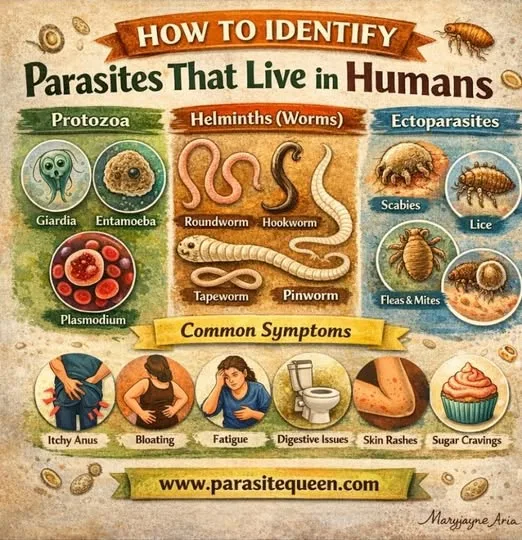
Skin manifestations linked to parasites can look dramatic, uncomfortable, and sometimes frightening. The key is correct identification, early treatment, and preventing spread. Not every rash is a parasite, and not every circular lesion is a worm. Clear differentiation matters.
Ringworm
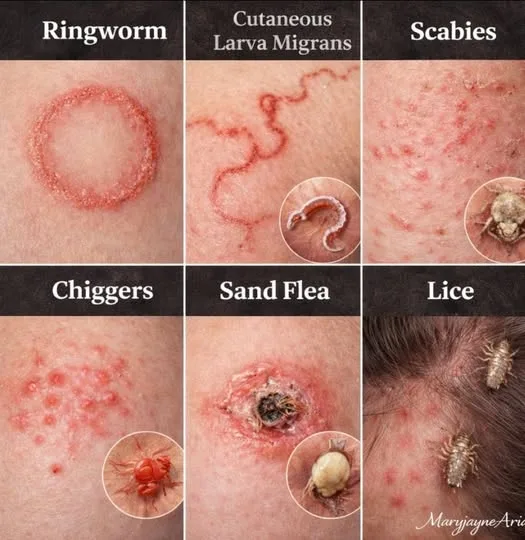
Despite the name, ringworm is not a worm. It is a fungal infection called tinea. It appears as a circular red rash with a clearer center and slightly raised, scaly edges. It spreads through skin contact, shared towels, gym equipment, pets, or damp environments.
Early response:
Keep the area clean and dry.
Apply a topical antifungal cream for at least two to four weeks.
Avoid steroid creams, as they can worsen fungal spread.
Wash clothing and bedding regularly.
Cutaneous Larva Migrans
This condition is caused by hookworm larvae penetrating the skin, usually from contaminated sand or soil. It produces a winding, snake like red track that slowly migrates under the skin. It can be intensely itchy.
Early response:
Seek medical care for anti parasitic treatment such as ivermectin or albendazole.
Avoid scratching to prevent secondary infection.
Wear footwear on beaches and in sandy areas where exposure risk is higher.
Scabies
Caused by microscopic mites that burrow into the skin. It presents with intense itching, especially at night, and small red bumps often between fingers, wrists, waistline, or groin.
Early response:
Prescription topical treatment such as permethrin is required.
Treat all close household contacts at the same time.
Wash clothing, towels, and bedding in hot water.
Vacuum soft furnishings.
Chiggers
These tiny larvae attach to the skin and cause clusters of very itchy red bumps, often around tight clothing lines such as socks or waistbands.
Early response:
Wash skin thoroughly after outdoor exposure.
Use soothing natural creams or oral antihistamines for itch control.
Avoid scratching to prevent infection.
Sand Flea
Also known as tungiasis in certain regions, the female flea burrows into the skin, often on feet, producing a painful swollen lesion with a dark central dot.
Early response:
Removal is recommended.
Keep the area clean and covered.
Wear protective footwear in endemic areas.
Lice
Head lice live in the scalp and hair, causing itching and small red bumps. Nits are attached firmly to hair shafts.
Early response:
Use a natural lice treatment shampoo or tea tree oil.
Fine tooth combing to remove nits.
Wash bedding and hats in hot water.
Check close contacts.
Important Distinction
Ringworm is fungal. The others are parasitic infestations. Treatment differs significantly. Misidentifying fungal infections as parasites or vice versa delays healing.
When to seek medical evaluation
Rapidly spreading rash
Severe pain
Signs of bacterial infection such as pus, warmth, fever
Persistent symptoms despite treatment
The skin is an immune organ. These conditions reflect both exposure and immune response. Early recognition reduces complications, prevents transmission, and shortens recovery time.
Calm assessment, correct identification, and timely treatment are far more powerful than aggressive or unnecessary interventions.
Copyright Maryjayne Aria
FEEL FREE TO FOLLOW ME
FEEL FREE TO SHARE THIS POST