Skin changes can be alarming, especially when they appear suddenly, move, itch intensely, or do not respond to typical treatments. One of the most common concerns people share is whether a skin issue could be parasitic or something that simply mimics one. The confusion is real, and in many cases, understandable.
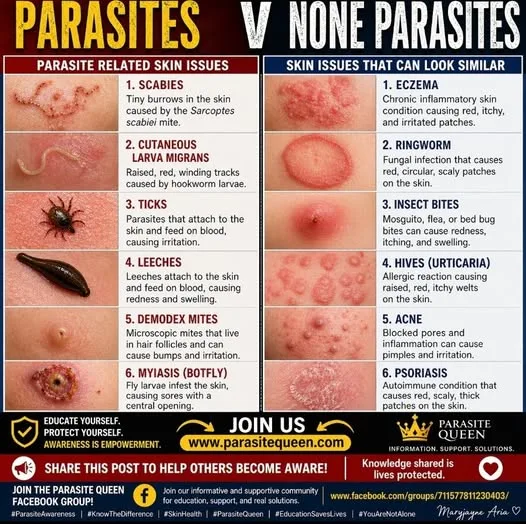
This comparison helps bring clarity by looking at true parasite related skin conditions alongside common lookalike conditions that are not caused by parasites.
True Parasite Related Skin Conditions
Certain parasites directly affect the skin and can often be identified by their behavior or distinct patterns.
1. Scabies is caused by microscopic mites that burrow under the skin, creating thin, winding tracks. The itching is often intense, especially at night.
2. Cutaneous larva migrans appears as raised, red, snake like tracks on the skin. This occurs when hookworm larvae migrate just beneath the surface.
3. Ticks are visible parasites that attach to the skin and feed on blood. They can cause localized irritation and may transmit infections.
4. Leeches attach externally and feed on blood, often leaving behind swelling and redness at the attachment site.
5. Demodex mites live in hair follicles and are usually harmless, but in higher numbers they can contribute to irritation, rough skin, or acne like symptoms.
6. Myiasis, often referred to as botfly infestation, occurs when fly larvae develop within the skin. This can create a painful lesion with a central opening.
Skin Conditions That Can Look Like Parasites
Many non parasitic conditions can closely resemble parasite activity, which can lead to misidentification.
1. Eczema causes red, itchy, inflamed patches that may flare and subside over time. It can sometimes appear similar to scabies due to the irritation.
2. Ringworm, despite its name, is not caused by a worm. It is a fungal infection that forms circular, scaly patches on the skin.
3. Insect bites from mosquitoes, fleas, or bed bugs can cause red, swollen bumps that may cluster or itch intensely.
4. Hives, also known as urticaria, are raised, itchy welts caused by allergic reactions. They can appear suddenly and move across the body.
5. Acne forms due to blocked pores and inflammation, sometimes mimicking small infestations or bumps under the skin.
6. Psoriasis is an autoimmune condition that creates thick, scaly patches that may resemble chronic skin irritation.
Why Misidentification Happens
The skin has a limited number of ways to respond to irritation. Redness, itching, bumps, and lesions can result from many different triggers including parasites, immune reactions, infections, and environmental exposure.
Movement sensations, crawling feelings, or persistent itching can further reinforce the belief that parasites are present, even when the underlying cause is different. On the other hand, true parasitic infections are sometimes overlooked or dismissed, especially when they present in less typical ways.
What To Do Next
If you are experiencing persistent or unusual skin symptoms, proper identification is key. Laboratory testing, skin scrapings, or microscopic evaluation can help confirm whether a parasite is present.
Avoid guessing or self diagnosing based only on appearance. Treating the wrong condition can prolong discomfort and delay proper care.
Focus on supporting the skin barrier, maintaining hygiene, and seeking informed evaluation when symptoms do not resolve.
Awareness Matters
Understanding the difference between parasite related conditions and their lookalikes empowers better decisions. The more informed you are, the more effectively you can respond to changes in your body.
Share this information to help others recognize the signs and reduce confusion around skin health.
For more insights into parasites and how they impact the body, visit www.parasitequeen.com
Join the community for deeper discussions and shared experiences