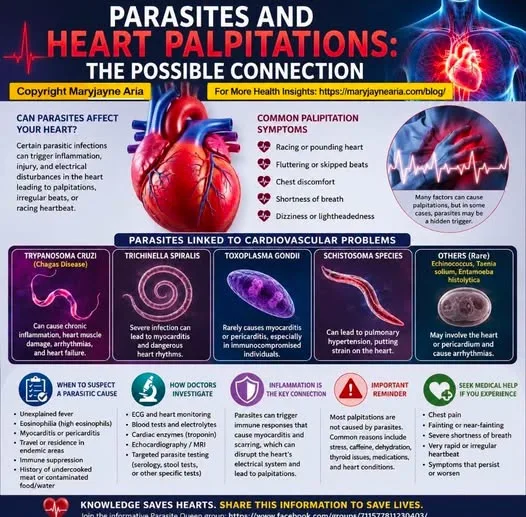
Heart palpitations are common and usually have many possible causes, but certain parasitic infections can affect the cardiovascular system and, in rare circumstances, contribute to abnormal heart rhythms. The connection is medically documented, although parasites are not among the most common explanations for palpitations. A 2026 review in the European Heart Journal describes parasitic cardiovascular disease as uncommon overall but clinically important, particularly in people with relevant travel, geographic, immune, or exposure histories.
What are palpitations? Palpitations are the sensation that the heart is racing, pounding, fluttering, skipping beats, or beating irregularly. They can occur with anxiety, dehydration, fever, anemia, thyroid disorders, electrolyte disturbances, medications, stimulants, hormonal changes, and many heart conditions. Therefore, feeling palpitations does not by itself indicate a parasitic infection.
How could a parasite affect the heart? Parasitic infections can affect the cardiovascular system through several mechanisms. Some organisms can directly involve cardiac tissue, while others trigger intense immune or inflammatory responses that damage the myocardium. Inflammation of the heart muscle, known as myocarditis, can interfere with the electrical pathways controlling the heartbeat and potentially produce premature beats, tachycardia, conduction abnormalities, or other arrhythmias.
Chagas disease: one of the most important examples Trypanosoma cruzi, the parasite responsible for Chagas disease, has one of the strongest established links between parasitic infection and chronic heart disease. Chronic infection can produce progressive inflammation, myocardial damage and fibrosis. Approximately 20% to 30% of chronically infected people may develop cardiomyopathy, which can manifest with arrhythmias, impaired cardiac function and heart failure.
Trichinella and inflammatory myocarditis Trichinellosis occurs after ingestion of Trichinella larvae, typically through inadequately cooked infected meat. Severe infection can involve the heart. Importantly, cardiac damage is thought to result largely from an eosinophil-rich inflammatory response rather than larvae simply occupying the heart muscle. Myocarditis can produce ECG abnormalities and potentially dangerous arrhythmias.
Toxoplasma gondii Toxoplasmosis is extremely common worldwide, but cardiac involvement is rare. When it occurs, myocarditis and pericardial inflammation have been reported, together with arrhythmias and, in severe cases, heart failure. Cardiac disease appears to be particularly important in people with impaired immunity, although rare cases have also been described in immunocompetent individuals.
Schistosomiasis and the pulmonary circulation Schistosoma does not usually cause palpitations by directly invading the heart. Chronic hepatosplenic schistosomiasis can contribute to pulmonary vascular disease and pulmonary arterial hypertension. This places additional strain on the right side of the heart and can eventually contribute to cardiovascular symptoms.
Other parasites with cardiac associations Echinococcus can form hydatid cysts involving cardiac structures, while Taenia solium cysticercosis can rarely involve the myocardium and produce conduction abnormalities or arrhythmias. Entamoeba histolytica can rarely cause pericardial disease, particularly when an amoebic liver abscess extends toward the heart. These complications are uncommon but medically recognized.
Inflammation may be the key connection A useful way to understand the parasite-heart relationship is to look beyond the parasite itself. Infection can activate inflammatory and immune pathways, producing myocardial inflammation, tissue injury and eventually fibrosis. Fibrotic tissue can disrupt the normal electrical conduction system. This provides a biological pathway from infection to abnormal heartbeat, even when parasites are not physically present throughout the heart.
Palpitations do not prove parasitic infection This distinction is extremely important. Most people experiencing palpitations do not have a parasite affecting their heart. Caffeine, alcohol, nicotine, stress, poor sleep, dehydration, fever, electrolyte abnormalities, medications and ordinary cardiac arrhythmias are considerably more common explanations. A parasite should be investigated when the clinical history provides a reason to suspect one, rather than assuming that unexplained palpitations automatically indicate parasitic disease.
When investigation may be appropriate A parasitic cause becomes more relevant when palpitations occur alongside unexplained fever, eosinophilia, persistent inflammatory symptoms, unusual cardiac imaging findings, myocarditis, significant gastrointestinal or systemic symptoms, exposure to contaminated food or water, consumption of undercooked meat, residence or travel in an endemic region, or relevant immune suppression. The 2026 cardiovascular review specifically recommends considering parasitic causes in unexplained myocardial or pericardial disease when epidemiological exposure, fever, eosinophilia or immunosuppression is present.
How doctors investigate the heart Evaluation may include an ECG, blood tests, electrolytes, thyroid testing, cardiac enzymes such as troponin when myocarditis is suspected, echocardiography and sometimes cardiac MRI. Depending on exposure history and symptoms, targeted parasite testing may include serology, stool examination or other pathogen-specific investigations. Testing should be selected according to the suspected parasite because there is no single blood test that reliably detects every parasitic infection.
The important message Parasites can affect the heart, but this is not the usual explanation for palpitations. The strongest documented connections include Chagas cardiomyopathy, Trichinella-associated myocarditis, rare cardiac toxoplasmosis, and several less common forms of cardiac or pulmonary vascular involvement. Recognizing these possibilities matters because some parasitic cardiac diseases can progress silently before producing obvious cardiovascular symptoms.
Do not ignore persistent or severe palpitations. Palpitations accompanied by chest pain, fainting, severe breathlessness, marked weakness, or a sustained very rapid or irregular heartbeat require prompt medical assessment. The priority is to determine what is actually causing the rhythm disturbance, whether that is an infection, inflammation, an electrolyte problem, medication effect, or an underlying cardiac condition.
Feel Free to Share this article without making any changes to increase awareness.