Parasitic infections are OFTEN overlooked or misdiagnosed because their symptoms often overlap with more common conditions. Fatigue, abdominal pain, diarrhoea, nausea, weight changes, headaches, neurological symptoms, anaemia, fever and skin manifestations can have many possible causes. Some parasites can also remain asymptomatic for long periods or migrate between tissues, making detection more difficult. A negative test does not necessarily exclude every parasitic infection because the sensitivity of testing varies according to the organism, stage of infection, specimen collected and timing of the test. Misdiagnosis therefore delays appropriate treatment while the underlying infection continues. When symptoms persist or exposure history suggests a possible parasitic infection, the suspected organism and the most appropriate diagnostic method should always be carefully considered.
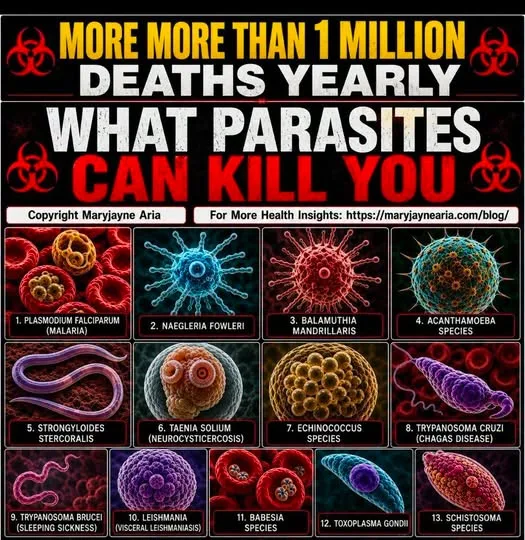
WHAT PARASITES CAN KILL US? With the surprising number of people who die from parasites annually, it is important to understand that parasitic disease is not simply about stomach upset, bloating or digestive discomfort. The latest figures show that malaria alone caused an estimated 610,000 deaths worldwide in 2024. Malaria is only one of many parasitic diseases capable of causing severe illness or death.
The true global number of deaths from all parasitic diseases is difficult to establish because infections are recorded through different surveillance systems and parasitic infections may not always be recognised as the underlying cause of death. The numbers well exceed one million. What is clear is that some parasites can invade the brain, destroy red blood cells, damage vital organs, cause severe inflammation, produce organ failure and, in some circumstances, progress rapidly to death.
MALARIA: THE MAJOR PARASITIC KILLER Malaria is caused by Plasmodium parasites transmitted by infected female Anopheles mosquitoes. Plasmodium falciparum is particularly dangerous and can produce severe anaemia, cerebral malaria, seizures, respiratory distress, organ dysfunction, coma and death. WHO estimated 282 million malaria cases and 610,000 deaths in 2024.
NAEGLERIA FOWLERI: THE BRAIN-EATING AMOEBA Naegleria fowleri is a free-living amoeba found in warm freshwater. In extremely rare circumstances, contaminated water entering the nose can allow the organism to reach the brain and cause primary amebic meningoencephalitis. The disease progresses rapidly and is usually fatal.
BALAMUTHIA MANDRILLARIS: A DEADLY BRAIN INFECTION Balamuthia is an environmental amoeba found in soil, water and dust. It can enter through skin wounds or through inhalation and can subsequently cause granulomatous amebic encephalitis. CDC describes this brain infection as nearly always fatal, although early diagnosis and treatment may improve the chance of survival.
ACANTHAMOEBA: POTENTIALLY FATAL INVASIVE INFECTION Acanthamoeba can cause infections of the eye, skin, sinuses and brain. Acanthamoeba keratitis can threaten vision, while disseminated infection and granulomatous amebic encephalitis can be life-threatening, particularly in people with impaired immunity.
STRONGYLOIDES STERCORALIS: A PARASITE THAT CAN BECOME DEADLY Strongyloides is a roundworm capable of maintaining infection in humans for years or even decades through autoinfection. Many infections cause few or no symptoms, but immunosuppression can trigger hyperinfection or disseminated strongyloidiasis. The parasite can then spread through multiple organs and cause severe disease or death.
TAENIA SOLIUM: THE TAPEWORM THAT CAN REACH THE BRAIN Taenia solium causes cysticercosis when humans ingest the parasite's eggs. When larval cysts develop in the brain, the condition is called neurocysticercosis. It can cause seizures, inflammation, hydrocephalus and increased pressure within the skull. Severe neurological disease can be life-threatening.
ECHINOCOCCUS: PARASITIC CYSTS THAT DAMAGE ORGANS Echinococcus tapeworms can produce hydatid cysts or infiltrative parasitic lesions in humans. The liver and lungs are commonly affected, but the brain, heart and other organs can also be involved. Cysts can become very large, interfere with organ function and, if ruptured, cause severe complications.
TRYPANOSOMA CRUZI: CHAGAS DISEASE Trypanosoma cruzi causes Chagas disease. Although many infected people have few symptoms initially, chronic infection can progressively damage the heart and digestive system. Cardiac complications can include cardiomyopathy, dangerous arrhythmias, heart failure and sudden death.
TRYPANOSOMA BRUCEI: AFRICAN SLEEPING SICKNESS Trypanosoma brucei causes human African trypanosomiasis, transmitted by tsetse flies. The parasites initially affect blood and lymph but can eventually invade the central nervous system. Without appropriate treatment, neurological deterioration can progress to coma and death.
LEISHMANIA: VISCERAL LEISHMANIASIS Visceral leishmaniasis is a systemic infection affecting organs including the spleen, liver and bone marrow. Severe disease can produce prolonged fever, weight loss, enlargement of the spleen and liver, anaemia and profound immune dysfunction. Untreated visceral leishmaniasis can be fatal.
BABESIA: A PARASITE OF RED BLOOD CELLS Babesia infects red blood cells and is commonly transmitted by ticks. Many infections are mild, but severe babesiosis can cause haemolytic anaemia, thrombocytopenia, organ dysfunction, respiratory failure and other serious complications. Risk is particularly high in people without a functioning spleen, older adults and people with weakened immunity.
TOXOPLASMA GONDII: USUALLY QUIET, SOMETIMES DANGEROUS Toxoplasma gondii is extremely widespread and most healthy people experience little or no illness. However, severe infection can damage the brain, eyes and other organs. Reactivation can cause life-threatening encephalitis in severely immunocompromised people, while infection acquired during pregnancy can cause serious congenital disease.
SCHISTOSOMA: PARASITIC BLOOD FLUKES Schistosoma species live within blood vessels and release eggs that become trapped in tissues. Years of chronic inflammation can produce fibrosis and progressive damage to the liver, intestines, urinary tract and other organs. Severe complications can include portal hypertension, kidney damage and bladder cancer.
WHY SOME PARASITIC INFECTIONS BECOME FATAL The presence of a parasite does not automatically mean that a person will develop severe disease. Outcome depends on the species, parasite life cycle, location within the body, intensity of infection, organs affected, immune response, age and other medical factors. Immunosuppression can be particularly important for infections such as Strongyloides, Babesia, Toxoplasma and invasive free-living amoebae.
THE MOST DANGEROUS PARASITES ARE NOT ALWAYS THE MOST COMMON Some parasites cause enormous numbers of infections but only a proportion become fatal. Others are extraordinarily rare but have very high mortality once invasive disease develops. This distinction matters. Naegleria fowleri and Balamuthia mandrillaris, for example, are rare, while malaria is widespread and responsible for hundreds of thousands of deaths each year.
WARNING SIGNS SHOULD NOT BE IGNORED Persistent unexplained fever, neurological changes, seizures, severe anaemia, unexplained organ dysfunction, prolonged gastrointestinal illness, significant eosinophilia, unusual skin lesions or a relevant history of travel, freshwater exposure, tick exposure or immunosuppression can sometimes provide important diagnostic clues. These findings do not prove parasitic infection, but they can justify appropriate medical investigation.
TESTING MATTERS Diagnosis depends on the particular parasite and may involve blood tests, microscopy, antigen or antibody testing, molecular testing such as PCR, stool examination, imaging, tissue examination or specialised testing. No single parasite test detects every parasitic infection, and testing should be selected according to symptoms, exposure history and suspected organism.
THE IMPORTANT MESSAGE: Parasites range from organisms that cause relatively minor or asymptomatic infections to pathogens capable of destroying brain tissue, invading vital organs, causing severe haemolysis or producing fatal systemic disease. Understanding which parasites can kill us is not about creating unnecessary fear. It is about recognising the infections that deserve accurate diagnosis, appropriate treatment and urgent medical attention when severe symptoms develop.
Please share this article without making any changes to increase awareness and help more people understand the serious side of parasitic disease.