In warm, moist soil contaminated with human waste, hookworm larvae can survive for weeks while waiting for contact with human skin. These organisms are not dramatic or visible to the naked eye, yet their strategy for survival is remarkably efficient.
Hookworms are among the most adaptive parasitic invaders affecting humans. The infective larvae do not need to be swallowed in food or water. Instead, they can penetrate intact skin, most commonly through the soles of bare feet. Agricultural workers, children playing outdoors, and individuals living in areas with inadequate sanitation are especially vulnerable.
After entering the skin, the larvae do not remain localized. They access small blood vessels and begin a systemic journey through the circulatory system. From there, they are transported to the lungs. In the lungs, they move into the airways, are coughed upward into the throat, and then swallowed. This process allows them to transition from the bloodstream into the digestive tract without the host being aware.
Once in the small intestine, hookworms attach to the intestinal lining using specialized mouthparts. They mature into adult worms and begin feeding on blood. Over time, chronic blood loss can occur. In mild infections, symptoms may be subtle. In heavier infections, individuals may develop iron deficiency anemia, fatigue, weakness, shortness of breath, and impaired cognitive function. In children, long term infection can interfere with growth and development. In pregnant women, anemia increases the risk of complications.
The lifecycle is silent. Skin penetration may cause mild itching or a localized rash. The lung phase may produce a brief cough. Many people do not realize they are infected until laboratory testing reveals anemia or parasite eggs in stool samples.
Prevention remains straightforward but essential. Consistent use of footwear in endemic regions reduces the risk of skin penetration. Improved sanitation infrastructure limits soil contamination. Proper disposal of human waste interrupts the transmission cycle. Public health initiatives continue to focus on education, deworming programs, and community level sanitation improvements.
Understanding the biology of hookworm infection highlights how a seemingly minor exposure can evolve into a systemic condition. The invasion is quiet, the migration complex, and the consequences cumulative.
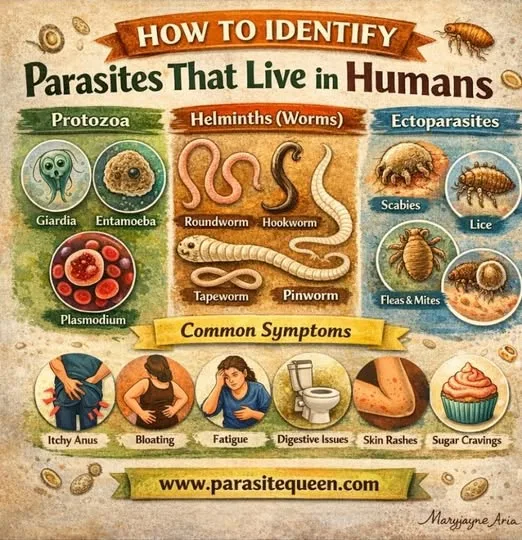
Detection depends on the organism. For hookworm and other intestinal helminths, a stool ova and parasite exam or stool PCR panel is most appropriate, ideally using three separate samples collected on different days because shedding is intermittent. A full blood count may show elevated eosinophils, and iron studies can reveal iron deficiency anemia in chronic hookworm infection. Strongyloides is often missed on routine stool tests, so a Strongyloides IgG antibody blood test is usually more sensitive, with PCR where available. Cutaneous larva migrans and Tunga penetrans are typically diagnosed clinically based on skin appearance and exposure history, while fungal infections are confirmed with skin scrapings and microscopy.
In broader terrain assessment, many practitioners and healers also look at immune activation markers such as eosinophils, IgE, and nagalase levels. Nagalase is not a direct parasite test, but elevated levels may reflect immune dysregulation or chronic inflammatory burden and can be interpreted in context with symptoms and other findings. No single test captures everything, so testing should be guided by exposure history, geography, symptoms, and overall immune status.
Written by Maryjayne Aria
FEEL FREE TO FOLLOW ME
SHARE FROM MY PERSONAL PAGE
SHARE THIS POST
GIVE IT A LIKE 
Source
Centers for Disease Control and Prevention. 2024. Hookworm. CDC Global Health, Division of Parasitic Diseases and Malaria.