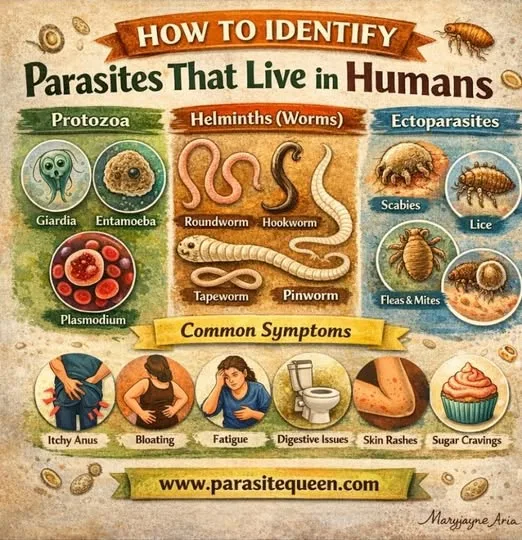
Parasites should never be ruled out!
Understanding how parasitic infections may contribute to headaches, what happens inside the body, and why the connection deserves investigation. Lets take a deep dive:
PARASITES AND HEADACHES: COULD THERE BE A CONNECTION? Headaches are one of the most common health complaints, but could a parasitic infection be responsible for the pain you are experiencing? When someone experiences recurring headaches, the cause is not always immediately obvious. Headaches can develop for many different reasons, and while common explanations are often considered first, certain parasitic infections can also produce headaches through specific biological mechanisms. The connection is particularly important when a parasite affects the nervous system, the tissues surrounding the brain, or the body's inflammatory response.
The idea that parasites may contribute to headaches is not simply a matter of speculation. Certain parasitic diseases are medically recognized causes of neurological inflammation, brain lesions, and other changes that can produce head pain. However, the connection depends greatly on the type of parasite and where it is located within the body.
Practitioners should always ask about travel history and investigate whether a parasitic infection could be responsible for the headaches. It should not be a question ignored.
A parasite living in the intestine is not automatically causing a headache. Likewise, experiencing a headache does not automatically mean that a parasite is present. To understand the connection properly, we need to examine how particular parasitic infections can affect the structures involved in headache and why some infections have a much stronger association with head pain than others.
HOW CAN PARASITES CAUSE HEADACHES? A parasitic infection may contribute to headache when it affects the brain, the membranes surrounding it, blood vessels, or the body's inflammatory response. The head contains several structures capable of producing pain. These include the meninges, which are the protective membranes surrounding the brain and spinal cord, blood vessels, and nerves involved in transmitting pain signals. The brain itself has relatively few pain-sensitive structures, which means that inflammation or irritation in the surrounding tissues can be especially important in the development of headache.
Certain parasites can directly affect the central nervous system. When this happens, the infection may produce inflammation, cysts, lesions, or changes in the normal circulation of cerebrospinal fluid. These effects can irritate pain-sensitive tissues and contribute to headaches. Other parasitic infections can influence headache through the immune system. When the body recognizes a parasite, it produces an immune response designed to control the infection. Inflammatory substances released during this response can influence tissues and pain pathways. Depending on the infection, this may contribute to headache without the parasite necessarily being located inside the brain.
The important point is that there is more than one possible mechanism. A parasite may cause headache through direct neurological involvement, inflammation, pressure changes, or a combination of these processes. The mechanism depends on the particular organism and the disease it produces.
PARASITES THAT DIRECTLY AFFECT THE BRAIN: Some parasitic infections can invade or develop within brain tissue, making headache a recognized consequence of the infection. The central nervous system is protected by several important barriers, including the blood-brain barrier. This helps protect the brain from many substances and infectious organisms circulating in the blood. However, certain parasites can reach or affect the central nervous system under particular circumstances.
When a parasite becomes established in the brain, it may produce a lesion or cyst. The surrounding tissue may react with inflammation, and the location of the lesion can influence how the infection affects the nervous system. A headache associated with a brain parasite is therefore not necessarily caused by the parasite physically moving around inside the head. It may be caused by the inflammatory response surrounding the parasite, irritation of nearby structures, or changes in the normal balance of pressure within the skull. This distinction is important because the biological process is more complex than simply saying that a parasite is present. The parasite's location, life cycle, and interaction with the immune system all influence whether headache develops.
NEUROCYSTICERCOSIS: A PARASITE THAT CAN PRODUCE HEADACHES THROUGH BRAIN INVOLVEMENT: Neurocysticercosis is one of the best-established examples of a parasitic infection associated with headaches. Neurocysticercosis is caused by the larval stage of Taenia solium, commonly known as the pork tapeworm. The infection occurs when the larval forms develop in the nervous system, including the brain.
The parasite can form cysts within brain tissue or in spaces surrounding the brain. These cysts may remain relatively quiet for a period of time, but inflammation can develop around them, particularly as the parasite degenerates. These cysts are often missdiognosed as cancer.
This inflammatory reaction is an important part of the disease. The immune system recognizes the parasite and responds to it, producing inflammation in the surrounding tissues. Depending on the location of the cyst, this inflammation may contribute to headache. Some cysts can also interfere with the circulation of cerebrospinal fluid. This fluid normally circulates around the brain and spinal cord, helping to protect and support the nervous system. If a cyst obstructs this circulation, pressure inside the skull may increase, potentially contributing to headache.
The relationship between neurocysticercosis and headache is therefore supported by several possible mechanisms. The cyst itself, the inflammatory response, and changes in cerebrospinal fluid circulation may all play a role. Not every person with neurocysticercosis experiences the same symptoms, and headache alone cannot establish the diagnosis. However, when the infection is present, it provides a medically recognized explanation for how a parasite can produce head pain.
CEREBRAL TOXOPLASMOSIS: WHEN A PARASITE AFFECTS BRAIN TISSUE: Toxoplasma gondii is another parasite capable of causing neurological disease and associated headaches. Toxoplasma gondii is a microscopic parasite that can infect humans. Infection is common in many parts of the world, but serious disease involving the brain is most strongly associated with people who have severely weakened immune systems.
When cerebral toxoplasmosis develops, the parasite can produce lesions within brain tissue. These lesions are often surrounded by inflammation, and the resulting changes can affect the nervous system. Headache may occur because of inflammation, swelling, or the effects of lesions on surrounding tissues. If the infection affects pressure within the skull, this may also contribute to the pain.
The connection between cerebral toxoplasmosis and headache is medically established in the context of brain infection. However, this should not be confused with the idea that ordinary headaches are commonly caused by Toxoplasma gondii. The presence of the parasite in the body does not automatically mean that it is affecting the brain. The location and activity of the infection matter greatly. When cerebral toxoplasmosis is suspected, medical professionals may use brain imaging and laboratory investigations to determine whether the parasite is involved in the nervous system. The diagnosis is based on the clinical findings and appropriate testing, not on headache alone.
PARASITIC MENINGITIS: HOW INFLAMMATION OF THE BRAIN'S PROTECTIVE MEMBRANES CAN CAUSE HEADACHE: Certain parasites can cause inflammation of the meninges, the membranes surrounding the brain and spinal cord. The meninges contain pain-sensitive structures, which makes inflammation in this area a recognized cause of headache. When an infection affects these membranes, inflammatory substances and immune cells become involved in the surrounding tissues.
One example is eosinophilic meningitis, which can be caused by certain parasitic infections, including Angiostrongylus cantonensis. This parasite is also known as the rat lungworm because rats are its definitive hosts. When the parasite affects the central nervous system, inflammation involving the meninges can contribute to headache. The pain is related to the effects of the infection on the protective membranes and the nervous system.
This is an important example because the parasite does not necessarily need to form a large cyst inside the brain to cause headache. Inflammation of the surrounding membranes can itself produce significant head pain. The diagnosis of parasitic meningitis depends on the suspected organism and the clinical circumstances. Investigations may include examination of cerebrospinal fluid, blood tests, and other appropriate diagnostic procedures.
INFLAMMATION AND HEADACHES: COULD THE IMMUNE RESPONSE BE RESPONSIBLE? The body's immune response to a parasitic infection may contribute to headache by affecting pain-sensitive tissues and neurological signalling. The immune system is constantly monitoring the body for infectious organisms. When it detects a parasite, it activates a response designed to control or eliminate the infection. This response involves immune cells and signalling molecules known as cytokines. Cytokines help coordinate inflammation and communicate between cells involved in the immune response.
Inflammation is an important protective process, but it can also influence how pain is experienced. When inflammatory substances affect tissues surrounding the brain or interact with neurological pain pathways, they may contribute to headache. The exact relationship depends on the parasite. Some infections produce a strong inflammatory response in particular tissues, while others may remain relatively localized. The type of immune response and the location of the infection can therefore influence whether headache develops..
CAN PARASITES CAUSE HEADACHES THROUGH PRESSURE INSIDE THE SKULL? Certain parasitic infections can affect the normal pressure surrounding the brain, creating another possible pathway to headache. The brain is enclosed within the skull, which is a rigid protective structure. The space inside the skull is limited, and the brain, blood, and cerebrospinal fluid must remain in a carefully balanced relationship. When infection produces swelling, a cyst, a lesion, or an obstruction of cerebrospinal fluid circulation, this balance can be disturbed. An increase in pressure inside the skull can affect pain-sensitive structures and contribute to headache. The severity and nature of the headache depend on the underlying cause and the degree of pressure change.
Neurocysticercosis is one example in which cysts may interfere with cerebrospinal fluid circulation, depending on their location. Other parasitic infections affecting the brain may also produce swelling or lesions that influence pressure. This mechanism provides a physical explanation for how certain parasites can cause headaches. It does not mean that every parasite produces pressure changes, or that every headache is caused by increased pressure. Pressure-related headaches can occur in many neurological conditions. If there is concern about a serious infection or pressure inside the skull, appropriate medical assessment is essential.
CAN PARASITES AFFECT THE BLOOD VESSELS AND CONTRIBUTE TO HEADACHE? Some parasitic infections can affect blood vessels or the tissues surrounding them, potentially contributing to headache. The brain depends on a constant supply of blood through a complex network of blood vessels. These vessels are surrounded by tissues and structures that can become involved in inflammation or infection.
Certain parasitic infections can affect blood vessels, produce inflammatory changes, or involve tissues associated with the circulation. Depending on the organism and the disease process, these changes may contribute to headache.
However, it would be inaccurate to claim that parasites commonly cause headaches by blocking blood vessels. The relationship is specific to particular infections and their complications.
When a parasite is known to affect the nervous system or vascular structures, medical professionals may investigate whether those changes are contributing to the headache. This is another reason why the identity of the parasite matters. Different organisms have different life cycles, tissue preferences, and mechanisms of disease.
WHAT ABOUT INTESTINAL PARASITES? COULD A PARASITE IN THE DIGESTIVE SYSTEM CAUSE HEADACHES? The connection between intestinal parasites and headaches is less direct and depends on the specific infection. Many intestinal parasites remain within the digestive tract and do not invade the brain or the tissues surrounding it. For these infections, there is no established basis for assuming that the parasite is directly causing headache simply because it is present in the intestine.
Some parasitic infections can affect the body more broadly through inflammation, nutritional effects, or other physiological changes. These mechanisms may be relevant in certain circumstances, but they should not be treated as proof that an intestinal parasite is responsible for a headache. For example, Giardia is a common intestinal parasite, but headache is not a specific diagnostic feature of giardiasis. A person who has Giardia and headaches may have two separate issues, or there may be another explanation for the pain.
The same principle applies to other intestinal parasites. A confirmed infection should be investigated appropriately, but the presence of the parasite does not automatically establish a cause-and-effect relationship with headache. The evidence for a direct connection is much stronger for certain parasites that affect the brain or meninges than it is for parasites that remain confined to the intestine.
COULD PARASITES CAUSE HEADACHES THROUGH CHANGES IN THE IMMUNE SYSTEM? The immune system plays an important role in parasitic infections, but changes in immune activity do not automatically mean that a parasite is causing a headache. Parasitic infections can interact with the immune system in complex ways. Some parasites stimulate inflammatory responses, while others can influence immune activity in ways that help them survive within the body.
These interactions may affect how the body responds to infection. In certain circumstances, immune activity can contribute to inflammation involving tissues associated with headache.
However, it is important to distinguish between a biological possibility and a proven cause. The fact that parasites interact with the immune system does not establish that they are responsible for an individual's headache.
There is no reliable basis for claiming that every headache is caused by immune suppression, elevated Nagalase, or a hidden parasitic infection. Such claims require evidence specific to the person and the suspected disease. A confirmed parasitic infection may help explain a headache when the organism is known to affect relevant tissues or produce a recognized inflammatory process. Without that evidence, the immune system alone cannot establish a parasitic cause.
CAN PARASITES CAUSE HEADACHES WITHOUT ENTERING THE BRAIN? Some infections may contribute indirectly to headache, but the strength of the evidence varies considerably between parasites. A parasite does not always need to be located inside the brain to affect the body. Certain infections can produce inflammatory responses or other physiological changes outside the nervous system that may influence pain pathways.
However, this does not mean that every parasite produces headaches through indirect effects. The connection must be considered in relation to the particular organism and the disease it causes.
For example, a parasite that remains within the intestine may not have a direct pathway to the tissues responsible for headache. Any proposed indirect mechanism would need to be supported by evidence rather than assumed.
This distinction is important because it prevents a broad claim about parasites from being applied to every infection. Some parasitic diseases have a well-established neurological connection, while others do not.
A responsible approach is to ask if parasites could be resposible for your headaches and ask your practitioner to investigate this. Always explain relevant exposure risks. Travel history, food and water exposure, contact with infected individuals or animals, and immune status. This will help determine which parasites should be considered. The choice of investigation should be guided by the suspected infection. A negative test for one parasite does not rule out every other parasite.
WHY PROPER DIAGNOSIS MATTERS BEFORE USING ANTIPARASITIC TREATMENT: Treating a headache as a parasitic infection without evidence can delay the correct diagnosis and may expose a person to unnecessary medication. Antiparasitic medicines are designed to treat particular infections. Their effectiveness depends on the organism, its life cycle, its location, and the medicine being used. A treatment that is appropriate for one parasite may not work against another. Some parasites require specific medicines, while others may require treatment directed at complications involving the brain or surrounding tissues. This is why it is important to identify the suspected infection before beginning treatment. The goal is not simply to eliminate a parasite, but to establish whether the parasite is present and whether it is actually responsible for the headache.
If a headache is caused by a neurological parasitic infection, treatment may involve more than antiparasitic medication alone. Inflammation, pressure changes, or other complications may also require medical management. The correct treatment therefore depends on the diagnosis, not on the assumption that all headaches are caused by parasites.
WHEN SHOULD A HEADACHE BE TAKEN SERIOUSLY? A sudden, severe, or unusual headache should never be assumed to be caused by parasites or treated as an ordinary headache without appropriate assessment. Some parasitic infections can affect the brain or its surrounding structures, and neurological infections may require urgent medical attention. A headache that develops suddenly and reaches maximum intensity within seconds or minutes requires emergency assessment. A new headache that is progressively worsening, particularly when there is concern about an infection capable of affecting the brain, also deserves prompt medical evaluation.
The bottom line. If you experience recurring headaches and suspect a parasitic infection, discuss the possibility with a qualified healthcare professional. Insist on proper assessment that can help such as testing and further investigation.
Please share this information without making any changes to help increase awareness of the importance of proper diagnosis for suspected parasitic infections. Copyright Maryjayne Aria author of Immume Health, Terrain and GcMaf