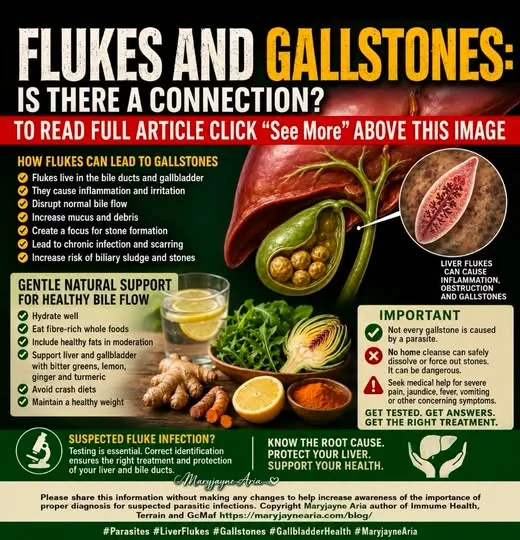
Gallstones are extremely common, but the possible role of parasites, particularly trematodes known as flukes, is rarely discussed in mainstream conversations about gallbladder disease. While diet, obesity, rapid weight loss, genetics, pregnancy, metabolic factors, and bile chemistry are well-established contributors to gallstone formation, certain parasitic infections can also affect the liver, bile ducts, and gallbladder. Understanding this connection is important because flukes can cause inflammation, obstruction, and long-term changes within the biliary system.
WHAT ARE FLUKES?: Flukes are parasitic flatworms belonging to a group called trematodes. Several species can infect humans and some specifically inhabit the liver, bile ducts, or gallbladder. Important examples include Fasciola hepatica and Fasciola gigantica, commonly known as liver flukes, as well as Clonorchis sinensis and Opisthorchis species, which inhabit the biliary system. These parasites have complex life cycles and infection commonly occurs through contaminated water, aquatic plants, or, depending on the species, raw or insufficiently cooked freshwater fish.
HOW FLUKES REACH THE BILIARY SYSTEM: The route through the body depends on the species. Fasciola species migrate through the intestinal wall and liver tissue before reaching the bile ducts, where they can mature into adult worms. Other liver flukes, including Clonorchis and Opisthorchis species, enter the digestive system after contaminated fish is eaten and eventually establish themselves in the bile ducts. Once present in the biliary system, flukes can cause persistent irritation and inflammation.
THE CONNECTION BETWEEN FLUKES AND GALLSTONES: Research has shown that parasites affecting the biliary system can contribute to conditions that favour stone formation. The presence of a fluke or its eggs may alter the normal environment of bile, while inflammation can interfere with normal bile flow. Slower or impaired bile movement, changes in bile composition, increased mucus production, epithelial damage, and chronic inflammation can all potentially contribute to the development of biliary sludge or stones.
In areas where liver fluke infections are endemic, studies have identified associations between hepatobiliary fluke infection and gallbladder or bile duct disease. The exact relationship can vary according to the parasite species, the intensity and duration of infection, and other risk factors affecting bile composition. A parasite should therefore not automatically be assumed to be the cause of every gallstone, but parasitic infection can be an important consideration in people with relevant exposure histories or unexplained biliary disease.
PARASITES AS A PHYSICAL FOCUS FOR STONE FORMATION: One mechanism is that parasite material may act as a focus around which substances in bile accumulate. Eggs, parasite debris, inflammatory material, mucus, and damaged epithelial cells may contribute to the formation of material within the biliary system. This is particularly relevant to certain brown pigment stones found in the bile ducts, where infection and inflammation are recognised contributors.
Gallstones can develop when substances normally dissolved in bile begin to precipitate and form crystals. Cholesterol, bilirubin-related pigments, calcium salts, mucus, bacteria, and other material may contribute to this process. Chronic inflammation and infection can create conditions that make normal bile flow less efficient.
BILE STASIS AND INFLAMMATION: Healthy bile flow is an important part of normal digestion and elimination. When bile becomes stagnant, concentrated, or obstructed, the risk of sludge and stone formation can increase. Flukes living within the bile ducts may cause mechanical irritation and inflammation, while swelling and changes to the lining of the ducts may further interfere with normal drainage.
Long-term infection may also cause structural changes within the biliary system. This is one reason why confirmed liver fluke infection should not simply be ignored. Some chronic liver fluke infections are associated with serious long-term hepatobiliary complications.
SYMPTOMS THAT MAY OVERLAP: Gallstones and biliary fluke infections can produce some similar symptoms, although symptoms alone cannot diagnose either condition. Possible symptoms of gallbladder or biliary disease include pain in the upper right abdomen, pain after fatty meals, nausea, vomiting, bloating, indigestion, fever in the presence of infection, jaundice, pale stools, and dark urine.
Fluke infections may also cause abdominal discomfort, fever during migration in some species, eosinophilia, fatigue, liver enlargement, abnormal liver enzymes, and chronic biliary symptoms. However, many of these symptoms can occur in numerous other medical conditions.
HOW TO TEST FOR A POSSIBLE FLUKE INFECTION: Testing depends on the suspected species and stage of infection. Stool examination can sometimes identify parasite eggs, although repeated samples normally necessary because egg shedding can vary. Serological testing may be useful, particularly during stages when parasites have not yet begun producing eggs. Imaging, including ultrasound, CT, or MRI-based techniques, may identify abnormalities involving the liver, gallbladder, or bile ducts.
Blood tests may also show eosinophilia in some parasitic infections, although eosinophil levels alone cannot diagnose a fluke infection. A healthcare professional or infectious disease specialist can help select appropriate testing based on travel history, food exposures, geographical location, and symptoms.
IMPORTANT: NOT EVERY GALLSTONE IS CAUSED BY A PARASITE: This point is essential. Gallstones are multifactorial. The most common risk factors include cholesterol metabolism, obesity, insulin resistance, rapid weight loss, age, genetics, pregnancy, certain medications, and conditions affecting bilirubin metabolism. Finding gallstones does not automatically mean that flukes are present.
However, where there is a history of consuming raw freshwater fish, contaminated water, uncooked aquatic plants, or living or travelling in areas where liver flukes are common, parasitic infection may be worth investigating.
SUPPORTING HEALTHY BILE FLOW NATURALLY: A healthy diet and lifestyle can support general digestive and metabolic health, natural approaches can also be useful when removing an established obstructing gallstone. But be very careful as a stone lodged in a bile duct can become a medical emergency.
HYDRATION AND REGULAR MEALS: Adequate hydration supports normal body function, while extreme fasting and repeated cycles of rapid weight loss and weight gain can increase the risk of gallstone formation. Regular balanced meals may help support normal gallbladder contraction.
FIBRE-RICH FOODS: A diet containing vegetables, legumes, fruits, nuts, seeds, and other fibre-rich foods support healthy cholesterol metabolism and bowel function. Fibre also supports the elimination of substances through the digestive tract.
HEALTHY FATS IN MODERATION: The gallbladder contracts in response to dietary fat. Completely eliminating dietary fat is not necessarily beneficial for gallbladder function, but extremely large quantities of fat can trigger pain in people with symptomatic gallstones. Sources such as olive oil, avocados, nuts, and seeds can be included according to individual tolerance.
MAINTAIN A HEALTHY AND STABLE WEIGHT: Obesity increases gallstone risk, but rapid weight loss can also increase the risk. Gradual, sustainable weight management is generally preferable to crash dieting.
A GENTLE NATURAL "GALLSTONE CLEANSE": There is no scientifically one home cleanse that I recommend to safely dissolve or force large gallstones out of the gallbladder as there are several. Popular olive oil and citrus "flushes" can produce soft green or brown masses in the stool, but these masses are not reliable evidence that all of the gallstones have been expelled. Also In some people with known gallstones, consuming a large quantity of oil can trigger gallbladder contraction and potentially provoke severe pain or obstruction.
A gentle supportive routine may include:
• Drinking adequate water throughout the day.
• Eating a fibre-rich whole-food diet.
• Including moderate amounts of healthy fats according to individual tolerance.
• Avoiding repeated crash diets and rapid weight loss.
• Reducing highly processed foods when they displace nutrient-rich foods.
• Maintaining regular physical activity where medically appropriate.
• Discussing persistent digestive symptoms with a qualified healthcare professional.
Foods traditionally used to support digestion include beetroot, leafy green vegetables, artichoke, bitter salad leaves, lemon, ginger, and turmeric. These foods may be valuable as part of a healthy diet, but they should not be claimed to dissolve gallstones or cure a fluke infection.
WHAT ABOUT HERBS?: Some herbs and plant compounds have been studied for effects on digestion, bile secretion, inflammation, or liver function.
Anyone with known gallstones, severe abdominal pain, jaundice, fever, vomiting, or abnormal liver tests should seek further assessment before attempting concentrated herbal or oil-based cleansing protocols.
CAN A PARASITE CLEANSE REMOVE LIVER FLUKES?: Confirmed liver fluke infections require species-specific diagnosis and treatment. There are some anecdotal claims that a general herbal parasite cleanse can replace appropriate treatment for an established human liver fluke infection. However the claims are not prooven, different fluke species respond to different medicines, and treatment should be selected according to the parasite involved.
Correct identification is especially important because persistent infection can cause continuing damage to the biliary system.
WHEN TO SEEK URGENT MEDICAL HELP: Severe or persistent upper abdominal pain, fever, chills, jaundice, repeated vomiting, dark urine, pale stools, or confusion may indicate serious gallbladder, liver, or bile duct disease. These symptoms require prompt assessment.
THE BOTTOM LINE: Flukes and gallstones can be connected through inflammation, changes in bile flow, infection, mucus production, and structural changes within the biliary system. This connection is particularly relevant in regions where liver flukes are endemic and in people with appropriate dietary, travel, or environmental exposure histories.
At the same time, it is important not to assume that every gallstone is caused by parasites. Gallstones have many well-established causes, and a proper diagnosis is essential.
Natural dietary and lifestyle measures may support general digestive and metabolic health, but aggressive "gallstone flushes" to remove gallstones and may be dangerous for some people. Where a fluke infection is suspected, appropriate testing is far more useful than guessing, because identifying the exact parasite allows appropriate treatment and follow-up.
Please share this information without making any changes to help increase awareness of the importance of proper diagnosis for suspected parasitic infections.