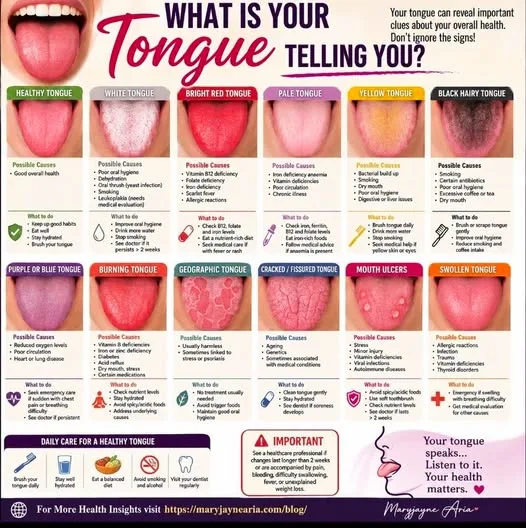
Your tongue does far more than help you taste food and speak. It can also provide valuable clues about your overall health. Changes in colour, texture, moisture, or sensation can sometimes be an early sign that something in your body needs attention.
While many tongue changes are harmless and temporary, others may indicate nutritional deficiencies, infections, autoimmune conditions, or more serious illnesses. If changes persist for more than two weeks, or are accompanied by pain, difficulty swallowing, bleeding, unexplained weight loss, or a lump, it is important to seek medical advice.
A Healthy Tongue:
A healthy tongue is usually:
• Pink in colour
• Slightly rough due to tiny papillae (taste buds)
• Moist, but not excessively wet
• Free from painful sores or thick coatings
WHAT TO DO:
• Brush your tongue gently every day.
• Drink plenty of water.
• Eat a balanced diet rich in vitamins and minerals.
• Visit your dentist regularly.
White Tongue:
Possible causes:
• Poor oral hygiene
• Dehydration
• Smoking
• Dry mouth
• Oral thrush (a yeast infection)
• Leukoplakia, which requires medical evaluation
WHAT TO DO:
• Improve oral hygiene and brush your tongue daily.
• Stay well hydrated.
• Stop smoking if you smoke.
• If the white coating wipes away and leaves a sore surface, you may have oral thrush. See your healthcare provider, as antifungal treatment may be needed.
• If white patches cannot be scraped off or persist for more than two weeks, seek medical advice promptly.
Bright Red Tongue:
Possible causes:
• Vitamin B12 deficiency
• Folate deficiency
• Iron deficiency
• Scarlet fever
• Kawasaki disease in children
• Allergic reactions
WHAT TO DO:
• Ask your healthcare provider about blood tests for vitamin and iron deficiencies.
• Eat foods rich in B vitamins and iron.
• Seek prompt medical care if accompanied by fever, rash, or severe illness.
Pale Tongue:
Possible causes:
• Iron deficiency anaemia
• Vitamin deficiencies
• Poor circulation
• Chronic illness
What to do:
• Request blood tests to check iron, ferritin, vitamin B12, and folate levels.
• Eat iron-rich foods and ensure adequate vitamin C intake to improve iron absorption.
• Follow your healthcare provider's advice if anaemia is diagnosed.
Yellow Tongue:
Possible causes:
• Bacterial build up
• Smoking
• Dry mouth
• Poor oral hygiene
• Occasionally digestive or liver problems
WHAT TO DO:
• Brush your tongue daily.
• Drink more water.
• Stop smoking.
• If accompanied by yellow skin or eyes, seek urgent medical assessment.
Black Hairy Tongue:
Possible causes:
• Smoking
• Certain antibiotics
• Poor oral hygiene
• Excessive coffee or tea
• Dry mouth
WHAT TO DO:
• Brush your tongue gently with a soft toothbrush or tongue scraper.
• Improve oral hygiene.
• Reduce smoking and excessive coffee intake.
• See your dentist if it does not improve.
Purple or Blue Tongue:
Possible causes:
• Reduced oxygen levels
• Poor circulation
• Heart disease
• Lung disease
WHAT TO DO:
• If the tongue suddenly turns blue or purple, especially with chest pain or difficulty breathing, seek emergency medical care immediately.
• If persistent without an obvious cause, arrange a medical evaluation.
Burning Tongue:
Possible causes:
• Vitamin B deficiencies
• Iron deficiency
• Zinc deficiency
• Diabetes
• Hormonal changes
• Acid reflux
• Dry mouth
• Anxiety or chronic stress
• Certain medications
WHAT TO DO:
• Ask for blood tests to check vitamin B12, iron, ferritin, zinc, folate, and blood glucose.
• Avoid spicy, acidic, or very hot foods until symptoms improve.
• Stay hydrated.
• Discuss persistent symptoms with your healthcare provider.
Geographic Tongue:
Possible causes:
• Usually harmless
• Sometimes associated with stress or psoriasis
WHAT TO DO:
• No treatment is usually necessary.
• Avoid foods that trigger discomfort, such as spicy or acidic foods.
• Maintain good oral hygiene.
Cracks and Grooves (Fissured Tongue)
Possible causes:
• Ageing
• Genetics
• Occasionally associated with certain medical conditions
WHAT TO DO:
• Clean the tongue carefully to remove trapped food debris.
• Stay hydrated.
• See your dentist if soreness develops.
Mouth Ulcers:
Possible causes:
• Stress
• Minor injury
• Vitamin deficiencies
• Viral infections
• Autoimmune diseases
WHAT TO DO:
• Avoid spicy or acidic foods.
• Use a soft toothbrush.
• Consider checking iron, folate, and vitamin B12 levels if ulcers recur.
• If an ulcer lasts longer than two weeks, seek medical advice.
Swollen Tongue:
Possible causes:
• Allergic reactions
• Infection
• Trauma
• Vitamin deficiencies
• Thyroid disorders
WHAT TO DO:
• Sudden swelling with difficulty breathing is a medical emergency. Call emergency services immediately.
• Mild swelling should be assessed by your healthcare provider to determine the underlying cause.
Keep Your Tongue Healthy
• Brush your tongue every day.
• Stay well hydrated.
• Eat a balanced diet rich in vitamins and minerals.
• Avoid smoking and excessive alcohol.
• Have regular dental check ups.
• Manage conditions such as diabetes if present.
• Seek healthcare advice if tongue changes last longer than two weeks.
The Bottom Line:
Your tongue can reveal valuable clues about your health, but it cannot diagnose disease by itself. Persistent colour changes, pain, burning sensations, unusual coatings, sores, or swelling should never be ignored. Paying attention to these signs and seeking medical advice when necessary can help identify nutritional deficiencies, infections, and other health conditions early.
Written by Maryjayne Aria Author of Immune Health, Terrain and GcMaf