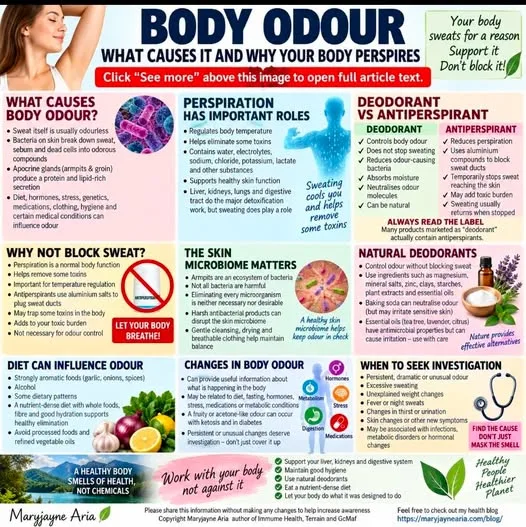
WHAT ACTUALLY CAUSES BODY ODOUR: Sweat itself is not usually the main cause of body odour. Fresh eccrine sweat is largely water and electrolytes and is generally odourless. The characteristic smell develops when microorganisms living on the skin metabolise components of sweat, sebum and cellular debris into volatile compounds. The apocrine glands, particularly concentrated in the armpits and groin, produce a protein and lipid-rich secretion that becomes much more noticeable after bacterial breakdown. Diet, hormones, stress, genetics, medications, skin microbiome, clothing, hygiene and certain medical conditions can all influence the intensity and character of body odour.
PERSPIRATION IS A NORMAL PHYSIOLOGICAL PROCESS: Perspiration has several important functions. Eccrine sweating is primarily involved in temperature regulation, allowing evaporation from the skin to cool the body. Sweat also contains water, sodium, chloride, potassium, lactate and other substances. The skin can therefore contribute small amounts of certain substances to the outside environment, but it is important not to overstate sweating as a primary detoxification pathway. The liver, kidneys, gastrointestinal tract and lungs perform the major work of metabolising and eliminating many unwanted compounds, however perspiring does play a role in illiminating toxins although a less than the liver and kidneys. Supporting these natural elimination systems is more useful than assuming that simply producing more sweat will remove large quantities of toxins yes it removes some.
WHY BLOCKING SWEAT CAN BE DIFFERENT FROM CONTROLLING ODOUR: This is where the distinction between deodorant and antiperspirant becomes important. A deodorant is designed primarily to control body odour. It does not necessarily stop the body from sweating. Depending on the formulation, deodorants may reduce odour-producing bacteria, absorb moisture, neutralise odour molecules or add fragrance. An antiperspirant, however, is specifically designed to reduce perspiration. Most conventional antiperspirants use aluminium-based compounds that temporarily form plugs within sweat ducts, reducing the amount of sweat reaching the skin surface and adding toxic burden to the body.
DEODORANT VERSUS ANTIPERSPIRANT: These products are often treated as though they are the same thing, but they serve different purposes. Deodorant = primarily odour control. Antiperspirant = perspiration reduction. Some commercial products combine both, meaning they contain an odour-control ingredient together with an antiperspirant active ingredient. Reading the label is therefore important because a product marketed simply as a "deodorant" may actually contain an antiperspirant.
Perspiration is viewed as one component of the body's normal elimination and regulation processes, so routinely attempting to suppress a normal physiological function may not be considered ideal when it is unnecessary. Sweating is responsible for eliminating some systemic toxins. The strongest physiological reason for allowing normal sweating is thermoregulation and maintenance of normal skin function, rather than relying on the armpits as a major detoxification organ.
WHAT HAPPENS WHEN YOU USE ANTIPERSPIRANT: Aluminium salts used in antiperspirants work locally at the sweat duct. They temporarily reduce sweat reaching the surface of the skin. The body does not simply become incapable of sweating altogether, however. Other sweat glands remain active, and sweating can occur elsewhere on the body. When antiperspirant is stopped, normal sweating generally returns as the temporary effect wears off. This is very different from permanently blocking the body's ability to perspire.
CAN ANTIPERSPIRANTS "TRAP TOXINS" IN THE BODY?: To question whether routinely suppressing sweating is desirable. Antiperspirants trap some quantities of toxins inside the body. The body has multiple sophisticated elimination pathways, and the kidneys and liver are far more important for systemic waste removal than underarm sweat. Aluminium compounds in antiperspirants conventional use causes systemic toxin accumulation. The natural approach is best.
WHY BODY ODOUR CAN SOMETIMES CHANGE: A sudden or unusually strong change in body odour can occasionally provide useful information about what is happening within the body, blocking this system is the wrong thing to do. Changes in diet, fasting, hormonal fluctuations, stress, changes in the skin microbiome and certain medications can alter odour. Some metabolic conditions can also produce distinctive smells. For example, a fruity or acetone-like odour can occur with ketosis and, in people with diabetes. Persistent unexplained changes in body odour therefore deserve attention rather than simply being covered with stronger fragrance and alumimium based products.
THE SKIN MICROBIOME MATTERS: Your armpits are an ecosystem containing bacteria that interact with sweat and skin secretions. Eliminating every microorganism is neither necessary nor desirable. The goal should be maintaining a healthy skin environment while reducing excessive odour. Harsh antibacterial products used excessively can disrupt the skin microbiome and irritate the skin, potentially creating another problem. Gentle cleansing, adequate drying and breathable clothing can often make a significant difference.
NATURAL DEODORANTS: focus on controlling odour without deliberately preventing normal perspiration. Natural deodorants often use ingredients such as magnesium compounds, mineral salts, zinc compounds, starches, clays, plant extracts and essential oils to absorb moisture, alter the environment in which odour-producing bacteria thrive or reduce unpleasant smells. Baking soda is another commonly used ingredient because it can neutralise acidic odour compounds, although it can irritate sensitive skin, particularly when used in high concentrations.
ESSENTIAL OILS REQUIRE RESPECT: "Natural" does not automatically mean "non-irritating." Essential oils such as tea tree, lavender or certain citrus oils may have antimicrobial or fragrance properties, but concentrated essential oils can cause irritation or allergic contact dermatitis. Citrus oils can also increase photosensitivity depending on the specific oil and formulation. A good natural deodorant should therefore be formulated for skin rather than simply consisting of concentrated essential oils.
A SIMPLE NATURAL APPROACH: Instead of trying to prevent the body from perspiring, focus on keeping the area clean, dry and microbiologically balanced. Wash gently, dry thoroughly, wear breathable fabrics and change clothing after significant sweating. A natural deodorant can then be used to manage odour without necessarily blocking sweat glands. If baking soda causes irritation, choose a bicarbonate-free formulation containing ingredients such as magnesium or zinc instead.
DIET AND BODY ODOUR: Food can influence body odour because compounds from digestion and metabolism can eventually affect perspiration, breath and other bodily secretions. Strongly aromatic foods, alcohol and some dietary patterns can noticeably change personal odour in susceptible individuals. A nutrient dense diet based around no processed foods, avoiding refined vegitable oil, adapting adequate hydration, fibre and a wide variety of plant foods supports the body's normal metabolic and elimination processes. However, there is no single "detox food" that magically removes accumulated toxins through sweat.
WHEN BODY ODOUR SHOULD NOT SIMPLY BE COVERED UP: Persistent, dramatic or unusual changes deserve investigation, particularly when accompanied by excessive sweating, unexplained weight changes, fever, night sweats, changes in thirst or urination, skin changes or other new symptoms. Body odour is associated with infections, metabolic disorders and hormonal changes. In those circumstances, masking the smell with deodorant misses the more important question: why has the odour changed?
THE BIGGER PICTURE: Your body does not need to smell artificially perfumed to be healthy, and perspiration is not something that needs to be feared or automatically suppressed. The more sensible approach is to respect normal physiology, support the liver, kidneys, digestive system and skin through healthy lifestyle choices, maintain good hygiene and control odour without unnecessarily interfering with perspiration. The goal is not to eliminate sweating. The goal is to understand why we sweat, why odour develops and how we can manage it while working with, rather than constantly against, normal body function.
Please share this information without making any changes to help increase awareness Copyright Maryjayne Aria author of Immume Health, Terrain and GcMaf