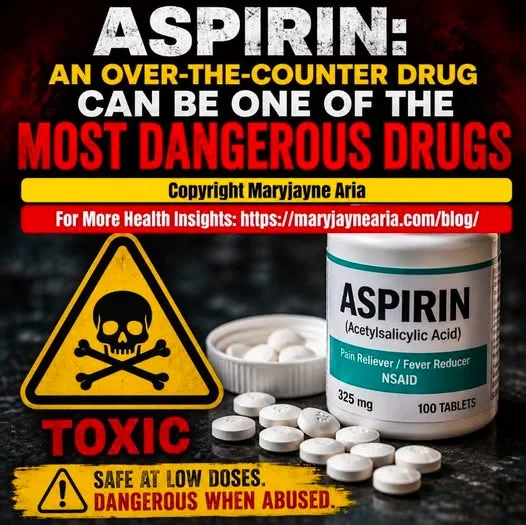
In 2021 alone, U.S. Poison Centers recorded 18,309 cases mentioning aspirin. Aspirin was among the nation's top 25 causes of poisoning deaths!
Aspirin is widely available, familiar, and often perceived as harmless. That perception can be dangerously misleading. Aspirin, also called acetylsalicylic acid, has legitimate medical uses, including pain relief, fever reduction, inflammation control, and prevention of certain cardiovascular events. However, its pharmacological effects become potentially life-threatening when excessive amounts are taken, particularly because salicylate poisoning can progressively disrupt cellular energy production, acid-base balance, fluid and electrolyte regulation, and neurological function.
How aspirin becomes toxic: At therapeutic doses, aspirin primarily inhibits cyclooxygenase enzymes, reducing prostaglandin and thromboxane production. In toxicity, salicylate has much broader effects. It interferes with mitochondrial oxidative phosphorylation, impairing the ability of cells to efficiently convert nutrients into usable energy. The body attempts to compensate by increasing metabolic activity and ventilation, producing a characteristic pattern of rapid or deep breathing and increasingly complex acid-base disturbances.
The dangerous acid-base cycle: Early aspirin toxicity commonly produces respiratory alkalosis because the brain's respiratory center is stimulated, causing excessive ventilation and loss of carbon dioxide. As toxicity progresses, metabolic acidosis can develop because cellular metabolism becomes increasingly abnormal and organic acids accumulate. Acidosis is particularly concerning because a lower blood pH increases the proportion of non-ionized salicylate capable of crossing into tissues, including the brain.
Why the brain is particularly vulnerable: Salicylate poisoning can produce tinnitus, dizziness, agitation, confusion, altered consciousness, seizures, and coma. A critically ill patient may have impaired glucose availability to the brain even when the measured blood glucose concentration is not dramatically low. Severe poisoning can therefore become a neurological emergency as well as a metabolic one.
The kidneys and electrolytes become involved: Aspirin toxicity can cause vomiting, dehydration, sweating, fever, and increased respiratory losses. Potassium can fall, creating another major problem because adequate potassium is important for effective urinary elimination of salicylate during alkalinization therapy. Kidney dysfunction can further reduce the body's ability to eliminate the toxin.
Why an overdose can continue getting worse: One of the most dangerous characteristics of salicylate poisoning is that the clinical situation does not always correspond to how the person initially feels. Some aspirin preparations can delay absorption, and salicylate concentrations may continue increasing after ingestion. A person can therefore appear relatively stable before developing substantial metabolic or neurological toxicity.
There is no simple antidote: A severe aspirin overdose cannot simply be "cancelled out" by another medication. Treatment is based on preventing further absorption, correcting the metabolic abnormalities, increasing renal elimination, and, when necessary, physically removing salicylate from the bloodstream. Hospital treatment may include activated charcoal, intravenous sodium bicarbonate, careful correction of electrolytes and, in severe cases, hemodialysis.
Why dialysis can become lifesaving: Hemodialysis is particularly important because it can rapidly remove salicylate from the bloodstream while simultaneously helping correct acid-base and electrolyte abnormalities. It may be required when poisoning produces severe neurological symptoms, persistent acidemia, kidney dysfunction, pulmonary complications, or other evidence of serious toxicity.
Why "reversing" an overdose of Asperin is not always possible: A severe overdose can be treated, and many people recover when treatment is started promptly. However, there is an important difference between removing a toxin and reversing damage already caused by that toxin. Once severe metabolic disturbances, oxygenation problems, seizures, brain injury, kidney failure, or other organ damage have developed, lowering the salicylate concentration does not automatically undo the injury. This is why early recognition and treatment are so important.
Over-the-counter does not mean harmless: The availability of aspirin without a prescription can create a false sense of safety. The same pharmacological properties that make aspirin useful therapeutically can become dangerous when the dose is excessive, when it is combined with other salicylate-containing products, or when it is taken by someone for whom aspirin carries additional risks. Aspirin can also increase gastrointestinal bleeding because platelet function is inhibited and protective prostaglandins in the stomach are reduced.
The hidden danger is familiarity: People often associate serious poisoning with prescription medications, illicit substances, or obviously toxic chemicals. Aspirin demonstrates why that assumption is unsafe. A medication can be inexpensive, familiar, legally available, and commonly used while still having a narrow margin between therapeutic benefit and serious toxicity in particular circumstances.
The key message: Aspirin maybe an important medicine, but it is not a benign substance. Excessive exposure can disrupt mitochondrial function, alter blood chemistry, affect the brain, disturb electrolytes, damage organs, and ultimately become fatal. Severe poisoning requires emergency medical treatment, not observation at home. Early treatment can be lifesaving, whereas waiting for severe symptoms can allow toxic effects to progress beyond the point where simply removing the drug can reverse the resulting injury.
The question remains, Why is Asperin an Over The Counter Drug When Other Less Harmful Drugs Are Heavily Controlled?
Feel free to share this post without making changes. Copyright Maryjayne Aria author of Immune Health, Terrain and GcMaf