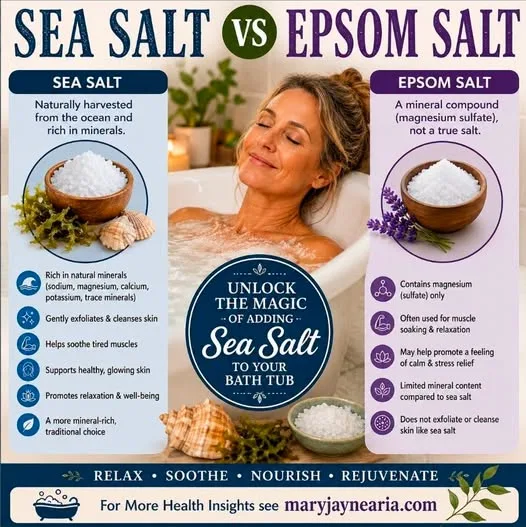
A warm bath has long been associated with relaxation, but adding natural sea salt can transform an ordinary soak into a soothing ritual for both your body and mind. Sea salt has been used for centuries in many cultures, not only to cleanse the skin but also to promote relaxation and support overall wellbeing.
While both sea salt and Epsom salt are popular bath additions, they are very different products with different properties.
What Is Sea Salt?
Sea salt is produced by evaporating seawater. Unlike highly refined table salt, natural sea salt contains a variety of minerals that may include:
• Magnesium
• Calcium
• Potassium
• Sodium
• Zinc (in trace amounts)
• Iodine (small amounts, depending on the source)
• Bromide and other trace minerals
The exact mineral content depends on where the salt is harvested.
Benefits of a Sea Salt Bath:
Helps Relax Muscles
Warm water naturally helps muscles loosen. The minerals in sea salt helps soothe tired, overworked muscles after exercise or a long day.
Supports Healthy Skin:
Sea salt acts as a gentle exfoliant, helping remove dead skin cells while leaving the skin feeling softer and smoother.
Helps Dry or Irritated Skin:
People with dry skin or mild skin irritation find that bathing in sea salt helps reduce discomfort and improves skin hydration. However, if you have eczema, psoriasis, or open wounds, it is best to consult a healthcare professional, as salt baths may sting or worsen symptoms in some individuals.
Encourages Relaxation:
A warm sea salt bath can help calm both body and mind, making it an excellent addition to an evening routine before bed.
Promotes Circulation:
Warm baths increase blood flow to the skin, and many people find that adding sea salt enhances the feeling of warmth and relaxation.
Naturally Cleanses the Skin:
Sea salt helps wash away excess oil, dirt, and impurities without many of the harsh chemicals found in some soaps.
Gentle Exfoliation:
The fine crystals help remove dead skin cells, leaving skin looking brighter and feeling smoother.
Sea Salt vs Epsom Salt:
Many people believe they are the same, but they are completely different substances.
Sea Salt:
Sea salt is primarily sodium chloride along with dozens of naturally occurring trace minerals derived from seawater. These minerals contribute to its unique composition and make it useful for skincare and bathing.
Epsom Salt:
Despite its name, Epsom salt is not actually a salt. It is a naturally occurring mineral compound called magnesium sulfate.
When dissolved in water, it separates into magnesium and sulfate ions. While many people use Epsom salt baths to relax, scientific evidence that significant amounts of magnesium are absorbed through the skin remains limited.
Why Many People Prefer Sea Salt:
Sea salt offers a broader range of naturally occurring minerals than Epsom salt. Because of this, many people choose sea salt when they want a more mineral-rich bathing experience.
Advantages include:
• A wider spectrum of trace minerals.
• Gentle exfoliation that Epsom salt does not provide.
• Natural cleansing properties.
• Skin-softening effects.
• A long history of traditional use around the world.
Epsom salt remains popular, particularly among those who specifically want a magnesium sulfate bath, but sea salt provides additional minerals and skincare benefits that many users appreciate.
How to Use Sea Salt in Your Bath:
1. Fill your bath with comfortably warm water.
2. Add 1 to 2 cups of natural sea salt.
3. Stir until dissolved.
4. Soak for 20 to 30 minutes.
5. Drink plenty of water afterwards to stay hydrated.
For an even more luxurious experience, you can add a few drops of essential oils such as lavender or chamomile, provided you tolerate them well and dilute them appropriately.
Choosing the Right Sea Salt
Not all sea salts are equal. Look for:
• Unrefined natural sea salt.
• Sea salt without artificial fragrances or dyes.
• Mineral-rich sea salt harvested from clean waters.
Avoid heavily processed salts that have been stripped of their natural trace minerals.
The Bottom Line:
Adding sea salt to your bath is a simple, inexpensive way to elevate your bathing routine. Its naturally occurring minerals, gentle exfoliating properties, and relaxing qualities make it a favourite for many people seeking a more therapeutic soak.
Sometimes, the simplest natural traditions remain among the most enjoyable.
For more health insights, please see https://maryjaynearia.com/blog/
Written by Maryjayne Aria Author of Immine Health, Terrian and GcMaf



