Dates are one of nature’s richest sources of natural sweetness and energy. Grown on date palms in arid regions across the Middle East and North Africa, they are among the world’s oldest cultivated fruits, cherished for both their flavour and their nourishment.
A Glimpse at Their Nutrition
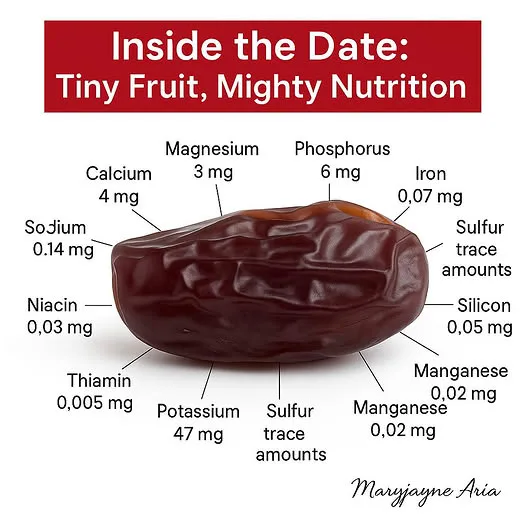
One average-sized date, roughly 7 to 8 grams, contains around 23 calories, 6 grams of carbohydrates (mostly natural sugars), 0.2 grams of protein, and 0.03 grams of fat. Beyond that small bite lies a surprising concentration of vital nutrients:
Potassium: around 47 mg, supporting heart and muscle health.
Magnesium: roughly 3 mg, aiding energy production and nerve balance.
Calcium: about 4 mg, contributing to bone strength.
Iron: 0.07 mg, helping red blood cell function.
Vitamin B6: 0.012 mg, essential for metabolism and brain function.
Fiber: 0.6 to 0.8 grams, promoting digestion and satiety
Eating just three to four dates provides enough natural energy to sustain gentle exercise or break a fast smoothly without strain on blood sugar.
The Types of Dates:
There are over 200 varieties of dates grown around the world, each with its own texture, flavour, and nutritional nuance. Some are soft and syrupy; others are drier and chewy. The main categories include:
Soft dates: sweet and moist (examples: Medjool, Barhi)
Semi-dry dates: slightly firm with balanced sweetness (Deglet Noor, Zahidi)
Dry dates: low moisture and longer shelf life (Thoory, Sayer)
Top Five Dates and Their Origins:
1. Medjool (Morocco, Jordan, USA): Known as the “king of dates,” large and caramel-like. Richest in potassium and magnesium.
2. Deglet Noor (Algeria, Tunisia): Semi-dry with a delicate sweetness. Often used in baking.
3. Ajwa (Saudi Arabia): Small, dark, and soft with a mild prune-like taste. Revered for its cultural and medicinal heritage.
4. Barhi (Iraq): Round and golden when fresh, chewy and honey-flavoured when dried. High in moisture and antioxidants.
5. Mazafati (Iran): Soft, glossy, and rich with a deep chocolate-like sweetness. Contains one of the highest fiber contents among dates.
Antioxidants and Natural Energy
Dates contain powerful antioxidants such as flavonoids, carotenoids, and phenolic acid. These compounds help neutralize free radicals, supporting the immune system and reducing inflammation. Combined with natural sugars like fructose and glucose, dates deliver quick yet balanced energy.
Daily Benefits in a Bite:
A few dates a day can help stabilize digestion, support bone density, and maintain healthy muscle function. Their combination of minerals, antioxidants, and fiber makes them one of nature’s most efficient whole-food energy sources.
Sweet Wisdom:
Replace refined sugar with chopped or blended dates in smoothies, desserts, or energy balls. Each small fruit brings its own complexity of flavour and nourishment that refined sugar can never match.
For more health and nutrition insights join our growing community:
https://www.facebook.com/groups/agooddoctor/
We do the research, so you don't have to.
Written byMaryjayne Aria



