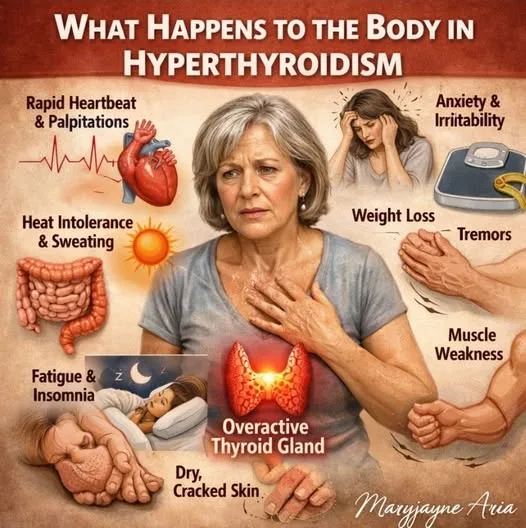
When someone develops hyperthyroidism, the body is essentially placed into metabolic overdrive.
The thyroid gland produces two key hormones, T4 and T3. These hormones regulate how fast your cells use energy. When levels become too high, every system in the body speeds up. The heart beats faster. The nervous system becomes overstimulated. Digestion accelerates. Heat production increases. It can feel like the internal engine is stuck on high rev.
What Happens in the Body:
Excess thyroid hormone increases oxygen consumption and mitochondrial activity. Cells burn fuel more rapidly. This leads to:
Increased heat production
Increased heart rate and blood pressure
Greater breakdown of fat and muscle
Accelerated bowel motility
Heightened nervous system sensitivity
Over time, the body can become depleted because it is burning through nutrients faster than they are replaced.
Common Symptoms
People with hyperthyroidism often experience:
Unexplained weight loss despite normal or increased appetite
Rapid or irregular heartbeat
Anxiety, irritability, or restlessness
Tremors in the hands
Heat intolerance and excessive sweating
Frequent bowel movements or diarrhea
Muscle weakness, especially in the upper arms and thighs
Fatigue despite feeling wired
Sleep disturbances
Hair thinning
Skin Changes Including Cracked Skin
Skin is frequently affected because thyroid hormones directly influence skin cell turnover and hydration.
You may see:
Warm, moist skin due to increased blood flow
Thinning skin
Increased sweating
Itching
Cracked skin, especially on the hands or heels
Cracked skin can happen for several reasons:
1. Increased metabolic rate depletes nutrients such as zinc, essential fatty acids, and vitamin A that are needed for skin barrier repair.
2. Excess sweating can paradoxically dry the skin surface once moisture evaporates.
3. Autoimmune thyroid conditions can coexist with other immune mediated skin issues.
4. Rapid turnover of skin cells may disrupt normal barrier integrity.
In Graves disease, an autoimmune form of hyperthyroidism, some individuals develop a specific thickened skin condition called pretibial myxedema, usually on the shins.
Common Causes
The most common causes include:
Graves disease, an autoimmune condition
Toxic multinodular goiter
Thyroid nodules that overproduce hormone
Thyroiditis, temporary inflammation releasing stored hormones
Excess thyroid medication
Why It Feels So Intense:
Thyroid hormones increase sensitivity to adrenaline. This is why people feel shaky, anxious, and experience palpitations. It is not just psychological. The nervous system is literally more reactive.
Long term untreated hyperthyroidism can strain the heart, reduce bone density, and cause muscle wasting.
Testing
Proper evaluation should include:
TSH, usually suppressed or very low
Free T4
Free T3
Thyroid antibodies such as TSI or TRAb if Graves is suspected
Thyroid peroxidase antibodies
Ultrasound if nodules are suspected
In some cases, a radioactive iodine uptake scan
A full nutrient panel can also be helpful, especially iron, ferritin, zinc, selenium, magnesium, and vitamin D levels, since the metabolic rate is elevated.
Helpful Advice:
1. Do not ignore persistent symptoms. Rapid heartbeat or unexplained weight loss warrants testing.
2. Support the body nutritionally. Ensure adequate protein intake to prevent muscle loss.
3. Replenish minerals, especially magnesium and selenium if appropriate.
4. Reduce stimulants such as caffeine.
5. Prioritize sleep and stress reduction. Stress can worsen autoimmune activity.
If you are experiencing cracked skin along with other hyperthyroid symptoms, consider both thyroid testing and a review of nutrient status. The skin often reflects internal metabolic imbalance.
Hyperthyroidism is very treatable when properly identified. The key is early recognition and balanced management before complications develop.
Written by Maryjayne Aria
FEEL FREE TO FOLLOW ME
SHARE FROM MY PERSONAL PAGE
SHARE THIS POST



