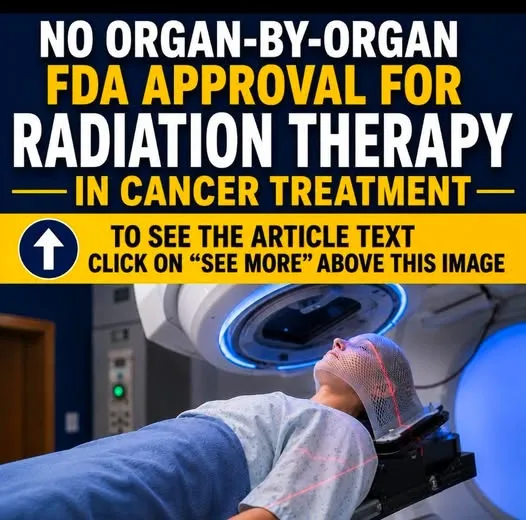
External-beam radiation therapy is widely used in cancer treatment, but the U.S. Food and Drug Administration does NOT approve radiation therapy as a treatment for individual organs. The FDA does NOT issue separate organ approvals stating that external-beam radiation is approved for the liver, lungs, brain, kidneys or any other organ!
THE FDA TO SOME DEGREE REGULATES THE EQUIPMENT: The U.S. Food and Drug Administration regulates medical devices and radiation-emitting electronic products. Within the FDA, the Center for Devices and Radiological Health regulates many medical devices and radiation-emitting products. Radiation therapy machines may therefore be subject to medical-device regulation, including applicable premarket review requirements and radiation safety requirements. However, regulation of a radiation machine is not the same as FDA approval of radiation treatment for organs or cancer locations.
FDA REGULATORY FEES APPLY TO THE MACHINE, NOT TO APPROVAL OF RADIATION FOR AN ORGAN: An important distinction is that an FDA regulatory fee for a radiation therapy machine is separate from FDA approval of radiation treatment for a specific organ. The FDA charges manufacturers and applicants regulatory user fees for certain medical-device submissions. These fees are part of the regulatory process for reviewing a medical device and do not represent a charge for approval of radiation treatment for an organ. For FDA fiscal year 2026, medical-device user fees include $26,067 for a standard 510(k) premarket notification, $579,272 for a Premarket Approval application, known as a PMA, and $173,782 for a De Novo Classification Request. The applicable pathway and fee depend on the classification and regulatory requirements of the specific device. A manufacturer pays a FDA regulatory user fee to submit a radiation-emitting medical device for review through the appropriate regulatory pathway, but payment of that fee does not mean that the FDA has approved radiation treatment for any organ.
HOW LONG DOES FDA REVIEW TAKE? A specific example is the RefleXion Medical Radiotherapy System. The RefleXion Medical Radiotherapy System was submitted to the FDA as a De Novo request on February 23, 2022. The FDA issued its classification order on February 1, 2023. That is approximately 343 days, or about 11 months from submission to the FDA decision. This is not much time!
PMA REVIEW TIME: For devices that follow the more stringent Premarket Approval pathway, known as PMA, the FDA only took a 180-day review period!
WHAT CAN BE INCLUDED IN TESTING AND REGULATORY REVIEW?: Depending on the specific device and regulatory pathway, evidence submitted for regulatory review may include engineering and bench performance testing, radiation-output and radiation-safety testing, electrical safety testing, electromagnetic compatibility testing, software verification and validation, mechanical stress, wear and reliability testing, manufacturing and quality-system information, instructions, warnings, contraindications and labelling, NONCLINICAL laboratory testing.
THERE IS ZERO FDA ORGAN APPROVAL SYSTEM FOR EXTERNAL-BEAM RADIATION: This is where considerable confusion can arise. A radiation therapy machine may be legally marketed and regulated as a medical device. Doctors may then use radiation technology within established medical practice. However, this does not mean the FDA has issued a separate organ-specific approval for external-beam radiation therapy for any tumour locations. The FDA does NOT publish separate approvals stating that external-beam radiation therapy is FDA approved for cancer of the liver, lungs, brain or every other organs.
HOW CAN RADIATION NEGATIVELY AFFECT HEALTHY ORGANS?: Radiation therapy works by delivering ionising radiation to a targeted area. Ionising radiation can damage DNA and other important structures inside cells. Cancer cells may be less able to repair certain forms of radiation damage, but healthy cells and tissues within or near the treatment field are often affected. The potential effects depend on the organ being treated, the total radiation dose, the amount of surrounding tissue exposed, the number of treatments, the radiation technique used and individual patient factors.
INFLAMMATION AND ACUTE TISSUE INJURY: Radiation causes inflammation in healthy tissue. This occurs during treatment or in the weeks and months following treatment. Inflammation affects the normal function of an organ and causes symptoms depending on the area treated. For example, radiation affecting the lungs often causes inflammation known as radiation pneumonitis. Radiation affecting the bowel often causes inflammation and irritation of the intestinal lining. Radiation affecting the bladder causes inflammation that often produces urinary issues.
DAMAGE TO BLOOD VESSELS: Radiation often affects small blood vessels within tissues. Over time, damage to blood vessels reduce blood flow and oxygen delivery to affected tissue. In many circumstances, this contributes to longer-term tissue injury and reduced organ function.
FIBROSIS AND SCARRING: One potential late effect of radiation is fibrosis. Fibrosis occurs when tissue develops increased amounts of scar-like connective tissue. This causes tissue to become thicker, less flexible and less able to function normally. The development and severity of fibrosis vary depending on the radiation dose, the organ treated.
REDUCED ABILITY OF TISSUES TO REPAIR THEMSELVES: Tissues normally replace damaged cells throughout life. Radiation often damages the cells involved in tissue renewal and repair. Depending on the radiation dose and the sensitivity of the tissue, this reduces the ability of an organ or tissue to recover from future injury.
EFFECTS ON THE BRAIN: Radiation to the brain often causes inflammation and swelling. Depending on the area treated and the dose received, the effectsinclude fatigue, headaches and neurological changes. Effects often occur later and involve changes in cognition, memory or other serious neurological functions.
EFFECTS ON THE HEART: Radiation exposure involving the heart or nearby structures often affect the heart muscle, blood vessels, heart valves or surrounding tissues. Many cardiovascular effects develop years after treatment.
EFFECTS ON THE LUNGS: Radiation involving the lungs often causes radiation pneumonitis, which is inflammation of lung tissue. In.these cases, longer-term fibrosis develop, affecting lung flexibility and capacity.
EFFECTS ON THE LIVER: Radiation often affect liver tissue and blood vessels. The liver has regenerative capacity, but excessive radiation exposure to sufficient liver tissue often impairs normal liver function.
EFFECTS ON THE KIDNEYS: Radiation often damages small blood vessels and structures involved in filtration. Depending on the dose and volume of kidney tissue exposed, kidney function can easily be negatively affected.
EFFECTS ON THE BOWEL: Radiation involving the abdomen or pelvis often affects the stomach or intestines. Effects can include inflammation, diarrhoea, pain, changes in bowel habits and, in many recorded cases, longer-term tissue changes.
EFFECTS ON THE BLADDER: Radiation involving the pelvis in many recoded cases irritate the bladder lining and cause inflammation. In many recoded cases patientsexperience urinary issues, while more significant tissue changes occur over time.
EFFECTS ON REPRODUCTIVE ORGANS: Radiation involving reproductive organs In many recoded case affect fertility and hormone production.
WHY THE REGULATORY DISTINCTION MATTERS: Patients deserve clear and accurate information. It is reasonable to ask whether the radiation device is legally authorised for marketing and use under the appropriate FDA regulatory pathway, what the manufacturer's intended use for the device is, which FDA regulatory pathway was used, how much testing was conducted before the device was submitted to the FDA, whether clinical testing involving human participants was required, how long the FDA review process took, whether a particular radiation treatment is established standard care or is only being studied, what evidence supports radiation for the specific cancer and stage, what the short-term and long-term risks are to surrounding healthy organs and tissues, and what alternatives are available.
THE KEY FACT: External-beam radiation therapy is NOT subject to an FDA organ-by-organ approval system in the same way that drugs are approved for specific diseases and conditions. The FDA regulates the radiation-emitting medical devices and related technologies used to deliver radiation. FDA regulatory fees paid by manufacturers for medical-device submissions are part of the process of regulating and reviewing the machine or technology. They are not fees for obtaining FDA approval to use radiation therapy on a specific organ. The RefleXion Medical Radiotherapy System provides one example of the time involved in a De Novo FDA review. It was submitted to the FDA on February 23, 2022, and received its FDA classification order on February 1, 2023, approximately 343 days or about 11 months later. For devices reviewed through the more stringent PMA pathway, the FDA generally has a 180-day review period by law after the PMA is accepted for filing.
INFORMED CONSENT: Patients should have the opportunity to understand the purpose of treatment, the evidence supporting it, potential benefits, possible short-term and long-term risks, alternatives and the consequences of choosing not to proceed. Understanding the distinction between FDA regulation of a radiation-emitting device and the clinical evidence supporting radiation treatment for a particular cancer can help patients and families ask more informed questions.
Please share this information without making any changes to help increase awareness and encourage informed discussion about cancer treatment, medical-device regulation and informed consent.



