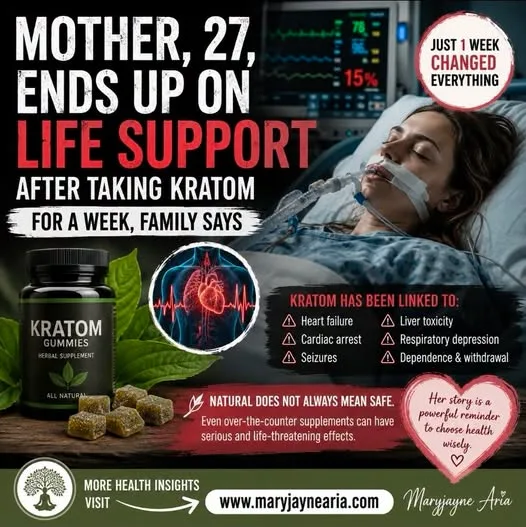
A 27-year-old Arizona mother of twins was placed on life support after reportedly suffering severe heart failure following just one week of taking kratom, a herbal supplement commonly sold in gas stations, smoke shops, and online.
According to reports from AZFamily, Amanda Goodsell had never used kratom before. She began taking kratom gummies after experiencing persistent leg pain, following a suggestion from her husband, who believed the product was safe because it was widely available over the counter.
Within days, the situation took a devastating turn.
One morning, Amanda's husband found her unresponsive in bed.
He described seeing her lips turning blue, her face red, and foam around her mouth. Believing she had died, he immediately called for emergency medical assistance.
Amanda was rushed to hospital, where doctors discovered her heart was functioning at only 15% capacity. She required a ventilator to breathe and powerful medications to keep her alive. Physicians initially feared she would require a heart transplant due to the severity of her heart failure.
Fortunately, after two weeks in intensive care, her heart function unexpectedly improved, eliminating the need for a transplant. Although she survived, Amanda now faces lifelong treatment, including heart medication and an implanted defibrillator.
What Is Kratom?
Kratom (Mitragyna speciosa) is a tropical tree native to Southeast Asia. Its leaves contain the active compounds mitragynine and 7-hydroxymitragynine, which interact with opioid receptors in the brain.
At lower doses, kratom may produce stimulant-like effects. At higher doses, it can produce opioid-like effects, including pain relief, sedation, and euphoria.
Many people use kratom to manage chronic pain, anxiety, depression, or opioid withdrawal. However, its safety remains controversial, and quality control varies widely between products.
Potential Risks:
Although many users report taking kratom without serious complications, medical literature has documented rare but significant adverse events, including:
• Heart rhythm abnormalities
• Heart failure
• Cardiac arrest
• Seizures
• Liver toxicity
• Respiratory depression
• Dependence and withdrawal symptoms
The exact cause of these reactions is often difficult to determine. Factors such as product contamination, inaccurate labeling, high doses, interactions with medications, or individual susceptibility may all contribute.
A Reminder That "Natural" Does Not Always Mean Safe:
One reason products like kratom can create a false sense of security is because they are readily available in convenience stores and gas stations. However, availability does not necessarily indicate safety or effectiveness. No two bodies are the same, therefore peple have different reactions, good and bad. Some sources have been found to contain inconsistent amounts of active ingredients or contaminants.
The Family's Warning:
Amanda's husband now hopes that sharing their story will encourage others to carefully consider the potential risks before using kratom.
Use under guidance. Never be alone when taking kratom and do a skin test first. Micro dosing may serve more useful.
Their experience serves as a reminder that even products marketed as natural supplements can have serious consequences in rare cases.
Anyone considering kratom should discuss it with a qualified professional, particularly if they have heart disease, liver disease, are taking prescription medications, or have other underlying medical conditions.
Amanda continues recovering at home while adjusting to a future that now includes lifelong cardiac care.
Written by Maryjayne Aria author of Immune Health, Terrain and GcMaf
For more health insights visit https://maryjaynearia.com/blog/



