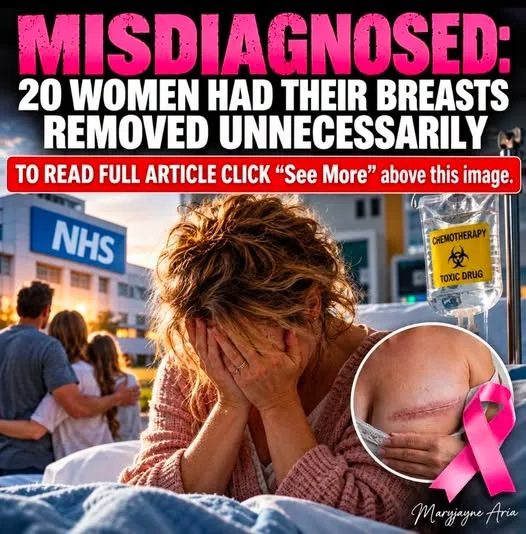
⁰ I have spent time looking into what happened within the breast service at County Durham and Darlington NHS Foundation Trust, and the more I read, the more difficult I find it to understand how the system reached this point. Twenty women have now been identified as having undergone unnecessary mastectomies, while the wider review has identified hundreds of patients who suffered harm, including excessive surgery, missed or delayed cancer diagnoses and treatment that did not meet expected standards. Of the cases reviewed so far, one patient is known to have died. The Trust has now decided to extend its look-back review, moving backwards year by year towards 2015.
TWENTY WOMEN IS ALREADY A SHOCKING NUMBER, BUT I CANNOT STOP THINKING ABOUT THE UNKNOWN: How many cases have not yet been recorded? How many women have never complained? How many patients simply accepted what happened because they trusted their doctors and had no reason to believe their treatment was inappropriate? The current figure is not necessarily the final picture because the review is still ongoing and is now being extended into earlier years. The Trust has said that its look-back has already identified harm in patients whose care would not necessarily have been picked up through the original review. That should make us ask just how much remains undiscovered.
THE WORD "UNNECESSARY" IS DEVASTATING WHEN YOU ARE TALKING ABOUT A MASTECTOMY: Imagine being told you have cancer, being told that your breast needs to be removed, preparing yourself and your family for major surgery and believing that this is the price you must pay to survive. Then imagine being contacted afterwards and told that the mastectomy was not necessary. A breast cannot simply be put back. The scar remains. The physical change remains. The memory remains. And so does the question that must be incredibly difficult for a patient to live with: why was this done to me?
THE PSYCHOLOGICAL DAMAGE CANNOT BE MEASURED BY COUNTING OPERATIONS: A woman's breasts can be closely connected to body image, identity, femininity, intimacy and confidence. Losing a breast unnecessarily can therefore create a psychological wound alongside the physical one. There can be grief, anger, anxiety, loss of confidence, distress within relationships and a profound loss of trust in the medical system. And the devastation reaches beyond the patient. Imagine being a husband, wife, partner, parent or child watching someone you love go through a cancer diagnosis, major surgery and months of treatment, believing that every stage is necessary, only to discover that the treatment pathway is now being questioned. Families suffer too, and their fear and helplessness cannot be recorded adequately in a medical file.
AND THEN THERE IS THE QUESTION OF WHAT OTHER TREATMENT FOLLOWED: Denise Howarth underwent a mastectomy followed by chemotherapy and radiotherapy before being told that the mastectomy had not been necessary. Reports state that she underwent eight rounds of chemotherapy. This most likely applied to all 20 women, it shows how far the consequences of one disputed surgical decision can extend. Chemotherapy is one of the most toxic classes of drugs used in modern medicine because its purpose is to destroy rapidly dividing cells, while also is damaging to healthy cells and producing serious adverse effects to include death. So I have to ask what happens psychologically and physically when a woman endures surgery, chemotherapy and radiotherapy believing that every stage is necessary, only to later discover that the mastectomy at the centre of that treatment pathway should not have happened.
AND THIS BRINGS ME TO A QUESTION ABOUT THE SURGERY ITSELF: What did the surgeon know when the decision to continue was made? What did the imaging show? What did the biopsy and pathology show? What had already been removed? Was there evidence supporting removal of the entire breast? Was the proposed extent of surgery discussed by the multidisciplinary team? And if the operation was being performed after a previous lumpectomy, what clinical evidence justified proceeding to mastectomy rather than considering breast-conserving options? I do not think these questions can simply be brushed aside. When an operation is irreversible, the reasoning behind it should be capable of withstanding intense scrutiny.
I ALSO WANT TO ASK WHETHER THE SURGEON COULD SEE ANYTHING THAT ACTUALLY JUSTIFIED CONTINUING: This is a question I would want answered from the operative records, imaging and pathology, rather than assumed from the outcome. If the original tumour had already been removed during an earlier lumpectomy, there may not have been a visible tumour for the surgeon to see during a subsequent mastectomy. But that makes the pre-operative evidence, pathology and decision making even more important. If the clinical evidence did not justify removing the entire breast, why did the operation proceed? Who challenged the decision? Who had the authority to stop it? And what safeguards were supposed to prevent an unnecessary irreversible procedure from happening?
WHAT FAILED BEFORE THESE WOMEN EVER REACHED THE OPERATING THEATRE?: The Trust's independent reviews identified serious and longstanding weaknesses involving clinical oversight, leadership, accountability and governance, with poor clinical practice allowed to persist. The Royal College of Surgeons review also identified concerns around surgical decision-making and multidisciplinary team working. The Trust itself has acknowledged that there were occasions when it should have listened more carefully, asked more questions and acted sooner.
THE NAMES MATTER BECAUSE ACCOUNTABILITY REQUIRES US TO UNDERSTAND WHO HELD WHICH RESPONSIBILITIES: Mr Amir Bhatti was the Trust's clinical lead for breast services from 2013 until 2024. His clinical practice was later restricted following patient safety concerns, and the High Court rejected his challenge to those restrictions in 2026. Mr Bhatti has said he remains committed to the ongoing investigation and that it would be inappropriate for him to discuss matters while proceedings continue. These facts establish in my view he was personally responsible for every case under review as were yhe whole medical team in surgery, his role as clinical lead makes his decisions and the systems operating under his leadership an important part of the scrutiny.
THE RESPONSE ALSO INVOLVED OTHER CLINICIANS: The Trust brought in an experienced external oncoplastic breast surgeon to lead the stabilisation and transformation of the service and appointed two new specialist oncoplastic consultants. Dr Shafie Kamaruddin, Acting Medical Director, has said the service has fundamentally changed, with patients now discussed by a full specialist team and treatment based on current national guidance. The fact that such extensive changes were subsequently considered necessary tells us how seriously the problems identified within the former service were being treated.
AND THEN WE COME TO THE DEATH: One patient is known to have died among the cases reviewed so far. I personally struggle with the idea that a death within a healthcare service under criminal investigation should simply be viewed as another statistic in a patient-safety report. I believe that death should be investigated as a potential homicide and examined with the full seriousness of a criminal case. Whether the evidence ultimately meets the legal definition of murder is a matter for investigators, prosecutors and the courts, but I believe the possibility of criminal responsibility deserves to be investigated thoroughly rather than allowing the death to disappear into the language of "clinical failings".
THE FACT THAT POLICE ARE ALREADY INVOLVED MAKES THIS EVEN MORE SERIOUS: Durham Police are investigating what happened at the Trust, with the National Crime Agency providing investigative support. That means the questions surrounding this service have moved beyond internal clinical review. There are now questions of potential criminal conduct that must be properly examined by the appropriate authorities.
BUT I KEEP RETURNING TO THE WOMEN WHO ARE STILL UNKNOWN: The Trust has already reviewed hundreds of cases and identified significant harm, yet the review is now being extended backwards towards 2015. How many women are still missing from the figures because nobody has yet looked at their records? How many may have been subjected to unnecessary or excessive surgery? How many experienced delayed diagnosis? How many were given treatment that did not follow accepted practice? How many are living with physical scars and psychological consequences without knowing that their care is now part of a much wider investigation? We simply do not know yet, and that is precisely why extending the review matters.
THE HUMAN COST IS FAR GREATER THAN THE NUMBERS: A woman may have spent years believing that losing her breast was necessary. Her partner may have watched her struggle through surgery and treatment. Her children may have watched their mother lose confidence or live with pain and fear. A family may have spent months or years believing that everything done was necessary to save someone they love. Then comes the phone call, the letter or the investigation that tells them something fundamental about that treatment is now being questioned. That can reopen trauma that never really disappeared.
I BELIEVE PATIENTS SHOULD NEVER BE AFRAID TO ASK DIFFICULT QUESTIONS: What exactly does my pathology show? What does my imaging show? Why is this operation necessary? What alternatives exist? Has my case been reviewed by the full multidisciplinary team? Would another specialist's opinion be appropriate? If the proposed operation is irreversible, what evidence supports removing the entire organ? And if chemotherapy or radiotherapy is being routinely recommended, what is the expected benefit and what are the risks? Asking those questions is not refusing medical care. It is demanding informed consent.
A REPORT CANNOT RESTORE A BREAST: An apology cannot erase a scar. Money cannot return months of fear or bring people back to life. An investigation cannot undo chemotherapy that has already been endured. And at least one death was connected to failures within the service, nothing can bring that person back to their family. What an investigation can do is establish the truth, identify exactly where decisions went wrong, determine whether criminal responsibility exists and ensure that those responsible cannot simply hide behind the complexity of a healthcare system.
I PERSONALLY BELIEVE THIS DESERVES THE HIGHEST LEVEL OF SCRUTINY: Twenty women have been identified as having unnecessary mastectomies. Hundreds of patients have been found to have suffered harm. One patient is known to have died. The review is expanding backwards through the years, and the possibility remains that the current numbers do not represent the full extent of what happened.
SO MY QUESTION IS NOT ONLY HOW MANY WOMEN WERE HARMED: It is how many have not yet been identified, how many families are still living without answers and how many opportunities existed to stop what was happening before irreversible decisions were made. When someone loses a breast unnecessarily, the consequence lasts a lifetime. When a patient receives powerful treatment unnecessarily, the consequences can extend throughout the body. And when someone dies, the question of exactly what happened becomes even more urgent.
I DO NOT BELIEVE WE SHOULD LOOK AWAY: These women deserve the truth. Their families deserve answers. Patients whose care falls within the review deserve a proper examination of what happened to them. And if the evidence establishes criminal responsibility, then those responsible should face the appropriate legal consequences. Healthcare depends upon trust, but trust cannot survive without accountability. When an irreversible decision is made about another person's body, the standard of scrutiny should be extraordinarily high.
Please share this information to help increase awareness.
Copyright Maryjayne Aria , author of Immune Health, Terrain and GcMAF.



