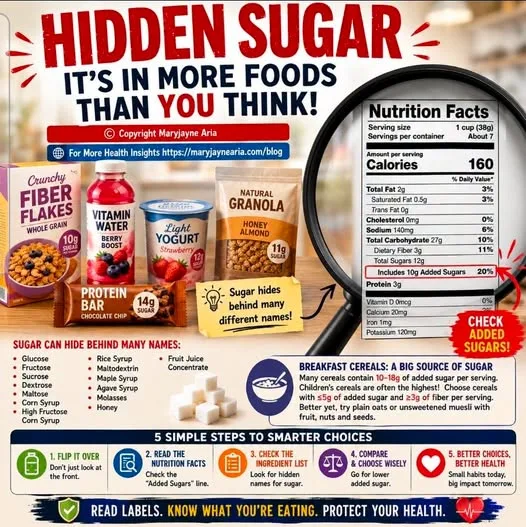
You may think you're making healthy choices by reaching for granola, breakfast cereal, flavored yogurt, protein bars, fruit smoothies, or vitamin water. Unfortunately, many of these products contain surprising amounts of added sugar, often hidden behind dozens of different names on the ingredient label.
One of the biggest offenders is breakfast cereal. Many cereals, including those promoted as "whole grain," "high fiber," or "heart healthy," contain significant amounts of added sugar. Some provide 10 to 18 grams of added sugar in just one serving. Since many people pour much more than the recommended serving size into their bowl, a seemingly healthy breakfast can quickly become the equivalent of eating several teaspoons of sugar before the day has even begun.
The problem is not just the amount of sugar we eat. It is that much of it is hidden in foods marketed as healthy.
Manufacturers use a wide variety of names for sugar, including:
• Glucose
• Fructose
• Sucrose
• Dextrose
• Maltose
• Corn syrup
• High fructose corn syrup
• Rice syrup
• Maple syrup
• Agave syrup
• Molasses
• Honey
• Fruit juice concentrate
• Maltodextrin
Because different sweeteners can be listed separately, they may appear lower on the ingredient list, making the product seem healthier than it really is.
Why does this matter?
Consuming excessive added sugar has been linked to:
• Weight gain and obesity
• Type 2 diabetes
• Fatty liver disease
• Heart disease
• Chronic inflammation
• Tooth decay
• Increased risk of metabolic syndrome
Many products marketed as "healthy" can contain significant amounts of added sugar. These include:
• Breakfast cereals
• Flavored yogurt
• Granola
• Protein bars
• Instant oatmeal
• Vitamin waters
• Sports drinks
• Smoothies
The good news is that food labels have become more transparent. Nutrition labels now include a separate line for "Added Sugars," making it much easier to see how much sugar has been added during manufacturing.
When choosing a breakfast cereal, look for one with no more than 5 grams of added sugar per serving and at least 3 to 5 grams of fiber. Better yet, choose plain oats or unsweetened muesli and add fresh fruit, nuts, or seeds for natural sweetness and extra nutrition.
When shopping, make these simple habits part of your routine:
• Turn the package over.
• Read the Nutrition Facts panel.
• Check the ingredient list.
• Look specifically for "Added Sugars."
• Compare similar products and choose those with lower added sugar.
Remember that naturally occurring sugars found in whole fruits and plain dairy products are different from added sugars because they are packaged with fiber, vitamins, minerals, and other beneficial nutrients. Added sugars, on the other hand, contribute calories with little or no nutritional value.
Small changes made consistently can have a powerful impact on your long term health. Learning to read food labels and recognizing hidden sugars is one of the easiest and most effective ways to protect your health and make better choices for yourself and your family.



