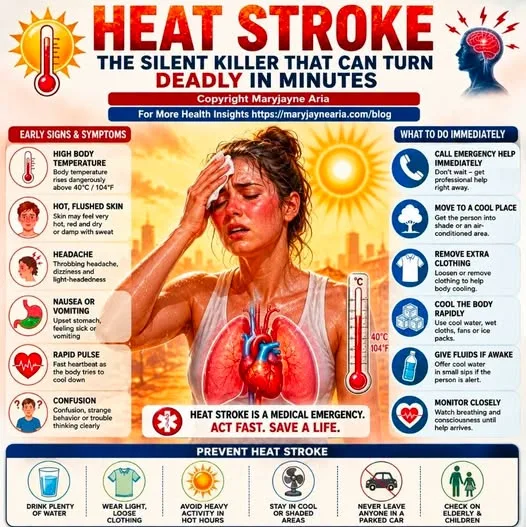
Heat stroke is one of the most dangerous medical emergencies caused by extreme heat. Unlike simple heat exhaustion, heat stroke occurs when the body's cooling mechanisms fail, allowing body temperature to rise rapidly, often above 40°C (104°F). Without immediate treatment, it can lead to permanent organ damage, brain injury, and even death.
As global temperatures continue to rise, understanding the warning signs of heat stroke could save your life or the life of someone you love.
What Is Heat Stroke?
Your body normally maintains a stable internal temperature through sweating and increased blood flow to the skin. However, prolonged exposure to high temperatures, especially when combined with humidity or strenuous physical activity, can overwhelm these natural cooling systems.
Once the body's core temperature climbs too high, proteins begin to break down, cells become damaged, and vital organs start to fail.
Heat stroke is a true medical emergency that requires immediate treatment.
Who Is Most at Risk?
Although anyone can develop heat stroke, certain individuals are especially vulnerable, including:
• Older adults
• Infants and young children
• Athletes
• Outdoor workers
• People with heart disease, diabetes, or obesity
• Individuals taking medications that reduce sweating or alter body temperature
• Those who are dehydrated
Early Warning Signs:
Recognising the symptoms early can prevent a medical catastrophe.
Common warning signs include:
• Extremely high body temperature
• Hot, flushed skin
• Severe headache
• Dizziness or light-headedness
• Weakness
• Rapid heartbeat
• Nausea and vomiting
• Dry mouth
• Muscle cramps
• Confusion or unusual behaviour
As heat stroke worsens, symptoms may progress to:
• Loss of consciousness
• Seizures
• Difficulty speaking
• Collapse
• Organ failure
These advanced symptoms require immediate emergency medical care.
What Happens Inside the Body?
As body temperature rises:
• The brain begins to swell, causing confusion and altered mental status.
• The heart works harder to pump blood to the skin.
• Blood pressure may fall dangerously low.
• The kidneys become damaged from dehydration.
• Muscle tissue breaks down, releasing harmful proteins into the bloodstream.
• The liver may begin to fail.
• Blood clotting abnormalities can develop.
Without rapid cooling, multiple organ failure can occur within hours.
Heat Stroke vs Heat Exhaustion:
Heat exhaustion is less severe and usually develops first.
Heat exhaustion typically causes:
• Heavy sweating
• Cool, clammy skin
• Fatigue
• Dizziness
• Muscle cramps
Heat stroke is different because:
• Body temperature becomes dangerously high.
• Mental confusion develops.
• The body may stop sweating.
• The skin often becomes hot and flushed. • Immediate emergency treatment is required.
What To Do Immediately
If you suspect heat stroke:
1. Call emergency medical services immediately.
2. Move the person into shade or an air-conditioned environment.
3. Remove unnecessary clothing.
4. Begin rapid cooling using cool water, wet towels, fans, or ice packs.
5. Place ice packs around the neck, armpits, and groin where major blood vessels are close to the surface.
6. If the person is fully awake and able to swallow safely, offer cool water in small sips. Never force fluids if they are confused, drowsy, or unconscious.
7. Monitor breathing and consciousness until medical help arrives.
8. Drink electrolites
Never delay seeking emergency care while attempting home treatment.
Preventing Heat Stroke:
Fortunately, most cases can be prevented by taking sensible precautions.
Protect yourself by:
• Drinking water and electrolites regularly throughout the day.
• Wearing loose, light-coloured clothing.
• Avoiding strenuous activity during the hottest hours.
• Taking frequent breaks in shaded or cool areas.
• Never leaving children, older adults, or pets inside parked vehicles.
• Using fans or air conditioning whenever possible.
• Checking on elderly neighbours during heat waves.
Recovery:
Even after successful treatment, recovery can take weeks or months depending on the severity.
Some individuals experience lasting problems with:
• Memory
• Concentration
• Kidney function
• Heart function
• Heat tolerance
Early treatment greatly reduces the risk of permanent complications.
Heat stroke develops rapidly and should never be ignored. Knowing the warning signs and acting immediately can mean the difference between full recovery and a life-threatening emergency.
During periods of extreme heat, stay hydrated, avoid overheating, and pay close attention to anyone showing signs of confusion, collapse, or an unusually high body temperature. Quick action saves lives.



