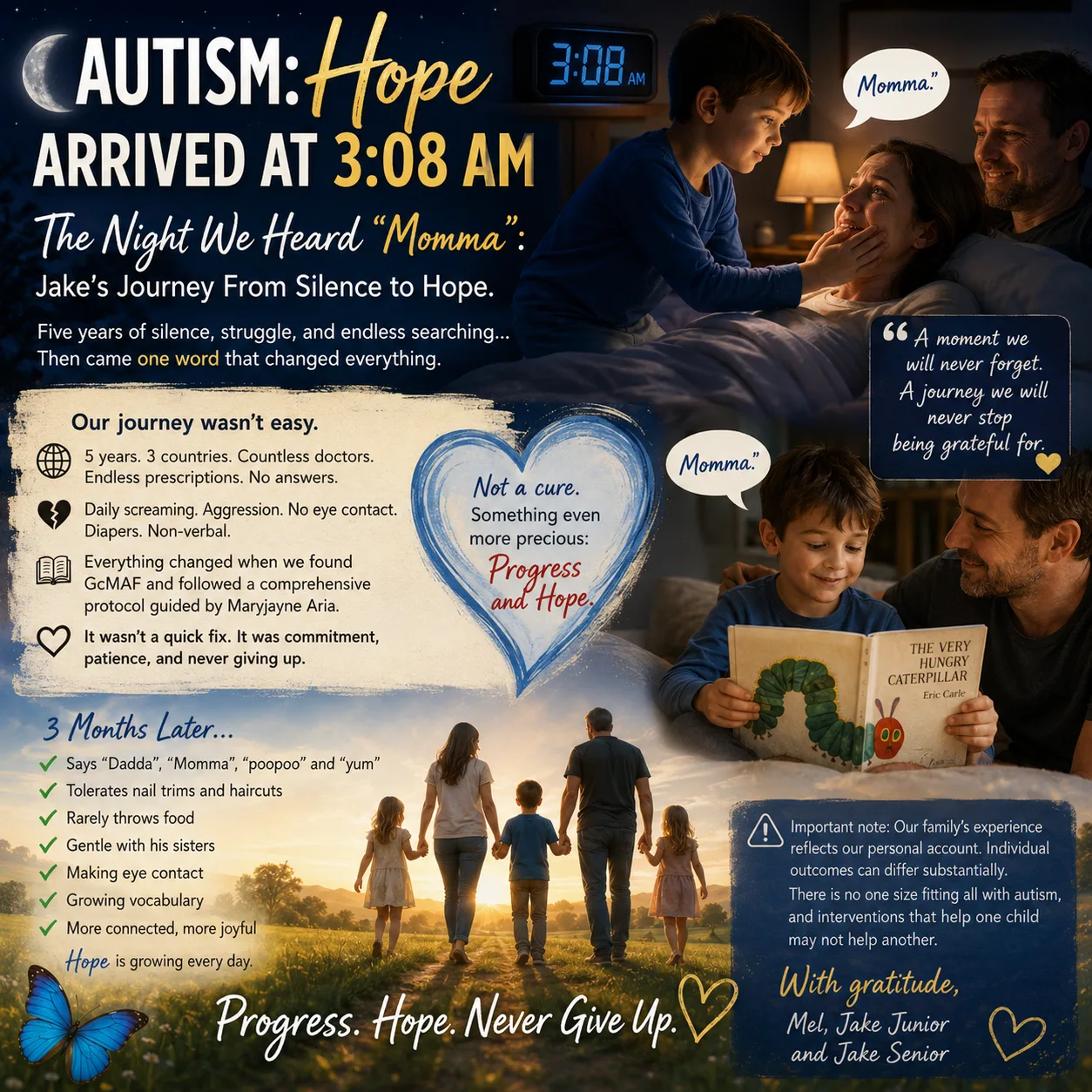
Children with Autism Spectrum Disorder frequently present with complex biomedical challenges, including gastrointestinal dysfunction, immune dysregulation, and neuroinflammation. Emerging integrative models suggest that parasitic infections can contribute significantly to this burden. Notably, the behavioral exacerbations seen in some children around the full moon may not be coincidental, but rather linked to changes in parasitic activity.
Parasites and Their Systemic Impact in ASD
1. Gastrointestinal and Immune Disruption Parasitic organisms such as Giardia, Entamoeba histolytica, Blastocystis hominis, and helminths interfere with gut integrity and modulate the host immune response. In children with ASD, who already experience increased gut permeability and atypical immune responses, these infections may worsen inflammation and behavioral symptoms.
2. Nutritional Depletion Parasites compete for essential nutrients, leading to deficiencies in iron, zinc, magnesium, and B vitamins, each crucial for neurological function and detoxification. This further impairs the neurodevelopmental landscape in children on the spectrum.
3. Neuroinflammation and Behavioral Manifestations Parasites release metabolic waste and neurotoxic byproducts that can either enter the bloodstream or signal systemic immune responses. In sensitive individuals, particularly children with ASD, these effects may manifest as hyperactivity, irritability, sleep disturbances, and cognitive regression.
4. Parasitic Migration into the Central Nervous System Some parasites possess the ability to penetrate the blood-brain barrier and enter the central nervous system (CNS). Organisms such as Toxoplasma gondii, Naegleria fowleri, and certain helminths have demonstrated neurotropic behavior, leading to neuroinflammation, demyelination, and potential disruptions in neurotransmission. In the context of ASD, where neuroinflammation is already a concern, such infiltration may compound neurological symptoms and behavioral dysregulation.
Lunar Rhythms and Parasite Behavior, The Full Moon Connection
The full moon phase is often associated with a notable uptick in behavioral symptoms among children with autism, a phenomenon that has historical roots and increasing scientific interest. This can be understood through several overlapping biological mechanisms:
1. Circadian and Circalunar Rhythms Parasites are influenced by the host’s melatonin and serotonin cycles, which are regulated by light and lunar rhythms. During the full moon, melatonin levels may drop while serotonin rises, creating an environment that facilitates increased parasitic activity, especially in the gastrointestinal tract.
2. Increased Parasite Reproduction and Mobility Many parasites follow lunar cycles for reproduction and movement within the host. The full moon may trigger a reproductive phase or migration pattern in parasites, leading to more toxins being released into the system and greater irritation or immune activation in the gut lining.
3. Behavioral Regression and Sleep Disruption Parents and clinicians often report spikes in sleep disturbances, agitation, and repetitive behaviors in ASD children during the full moon. This may be attributed to the neuroimmune response to heightened parasitic activity and toxic load, which affect neurotransmitter balance and gut-brain communication.
Innovative and Holistic Management Strategies
Timing of Interventions, Antiparasitic treatments, binders, and detox protocols may be more effective when aligned with the lunar cycle, particularly during or just before the full moon when parasites are most active and vulnerable.
Targeted Testing and Screening, Functional stool analysis and microscopy, particularly during symptomatic phases around the full moon, can yield more accurate diagnoses.
Nutritional and Immune Support, Ensuring optimal levels of zinc, magnesium, and fat-soluble vitamins helps strengthen gut integrity and immune response, reducing susceptibility to parasitic overgrowth.
The interplay between parasitic infections and lunar cycles presents an important, often overlooked, contributor to the complex symptomology of autism. Recognizing these patterns offers a more precise and empathetic approach to care. By integrating biomedical insights with natural rhythms, clinicians and caregivers can offer children on the spectrum not only relief, but the potential for measurable developmental gains.
More information surrounding parasites:
Microscopic parasite eggs can be found virtually anywhere and the shocking truth is that 90% of us ALREADY ARE infected with parasites. Here are some examples of how easily you can become a parasite host.
CONTAMINATED WATER
Water is the primary way parasites infect humans. For example, over 50% of our lakes, rivers, streams and creeks are infected with the Protozoa parasite Giardia Lambia.
This parasite is not killed by chlorine and is steadily finding it’s way into urban areas with “treated” drinking water. Symptoms of an infestation include, diarrhoea and cramping that lasts for over a week and is most often misdiagnosed as stomach flu.
ALSO when someone with parasites goes swimming, they can unwittingly be infecting other swimmers. As the water becomes contaminated with the hosts eggs. It only takes a very small amount of swallowed water to become infected.
ICE
Water in ice is a hidden danger, as we do not always know where the ice in our drinks comes from and so cannot always be sure that it isn’t tap water.
WASHED SALADS
Likewise, we do not know if the salad we order at a restaurant is also not washed with parasite infected tap water.
OTHER HUMANS
You can obtain parasite eggs from other humans very easily. Since most infections come from the anal-oral route think about this , someone has parasites, they use the restroom, do not wash their hands afterwards, then they sit down and use the salt shaker on the restaurant’s table, they have just deposited microscopic eggs onto this object. You are the next person to sit at this table and use the salt shaker, you then lick your finger or even put your hand to your face, you are now the new host to parasites.
Parasite eggs can live under human fingernails for up to 2 months. Think of how many common objects you come into contact with on a daily basis. Even more common infections come from kissing, holding hands, sharing eating utensils and of course, sexual contact.
Usually if one family member is a host to parasites, the entire family is infected. There are many parasite eggs that can live without a host for weeks, for example, microscopic pinworms eggs become airborne and can travel ANYWHERE and they can live for two days outside of a host. These microscopic eggs are inhaled where they then hatch inside your body.
ANIMALS
Animals, including pets, can spread 240 diseases to humans via parasites. By petting, or grooming animals, you are picking up eggs that pass from them to us via hands, nose and mouth.
ALSO parasite infected fleas and ticks and parasite infected animal faeces are concerns. This is why walking barefoot where animals have defecated is a major source of parasite infections, especially when you CAN’T SEE the actual animal faeces, you just happen to be walking where they have been before.
THINK about this, when your pet (or someone else’s) licks their anus, they are depositing thousands of eggs onto their tongues, then they lick you and those eggs have just been transmitted to their new host. YOU.
North America is rife with Parasites
North Americans now have the highest rate of toxoplasmosis parasites in the world, which are deadly to pregnant women. Pets and domesticated animals are not the only ones spreading parasites:
INSECTS
mosquitoes, fleas, ticks and lice and all other biting insects transmit protozoa (one cell) parasites to humans.
MEATS
Undercooked meats are a very high source of parasite infections. Commercial pork products are also notorious for infections , bacon, ham, pork chops, cold cuts, hot dogs, etc. Also cuts of meat such as beef, lamb, chicken and fish contain parasite eggs.
Sushi (raw fish) alone contains eggs and larvae of several species of parasites. We trust the cattle, pork and chicken producers to keep their livestock wormed on a regular basis, but over 50% of animals that go to slaughter are parasite infected.
FRUITS & VEGETABLES
Unwashed fruit and vegetables are also a big source of parasite carriers. A lot of vegetables are eaten raw and according to the Center for Disease Control diseases from fruit and vegetables are on the rise. With a huge demand for fruit and vegetables, North Americans import 30 billion tons of food per year. Some of this food comes from countries where animal manure and human faeces are used as fertiliser. This practice greatly increases the spread of parasites. The practice of eating out is also on the rise. Salad bars, infected food handlers, and improperly washed fruits and vegetables are all sources for parasites.
TRAVEL
In our modern age, world travel is a way of life for many. These travellers are bringing home parasites that were once almost unknown in America. Airplanes are a great source for parasite transmission. It’s very common for a family to go on vacation and bring back uninvited guests with them. We also have a huge influx of refugee and immigrant populations who are bringing us their countries’ parasites.
The following is a partial list from each of the four groups which will give you the general idea about how different parasites wreak havoc on our bodies.
THE PROTOZA (ONE CELL PARASITES)
Most parasites are ONE CELL PROTOZOA and they can invade ANY single cell in our bodies. Protozoa reproduce and multiply by duplicating themselves like a bacteria or virus.
GENITAL PROTOZOA
TRICHOMONAS, lives in the female vagina and urethra and causes a slightly yellow discharge with itching and burning. It also lives in the prostate of men.
NERVOUS SYSTEM PROTOZA:
NAEGLERIA, this one is found in water and soil, but only one species, naegleria fowleri, can infect humans. The infection mimics bacterial meningitis and affects the brain and spinal cord. The parasite enters the body through underwater swimming and/or diving, the ameba then travels to the brain and spinal cord. Infection causes Primary Amebic Meningoencephalitis (PAM), a brain inflammation, which leads to the destruction of brain tissue. Initial symptoms of PAM include headache, fever, nausea, vomiting and stiff neck. Further destruction of brain tissue leads to confusion, lack of attention, loss of balance and body control, seizures, hallucinations. This disease progresses very rapidly and usually results in death in 3-7 days. This one is not common, only 24 reported cases in the United States between 1989 and 2000, but it is caused from fresh water such as lakes, streams and hot springs, especially during dry summer months when the water levels are low and the temperature is above 80 degrees. It also comes from under-chlorinated swimming pools.
Trichosporon, Cryptococcus neoformans, Entamoeba histolytica and Paramecium caudatum, the herpes simplex virus, and viral infections.
Also cystitis, prostatitis, gonorrhea, and syphilis, cholera, giardia, salmonella, and Eschorichia Coli.
The following is a partial list from each of the four groups which will give you the general idea about how different parasites wreak havoc on our bodies.
THE PROTOZA (ONE CELL PARASITES)
Most parasites are ONE CELL PROTOZOA and they can invade ANY single cell in our bodies. Protozoa reproduce and multiply by duplicating themselves like a bacteria or virus.
GENITAL PROTOZOA
TRICHOMONAS, lives in the female vagina and urethra and causes a slightly yellow discharge with itching and burning. It also lives in the prostate of men.
after the initial infection. These symptoms include cardiac problems ,swollen oesophagus and/or swollen large bowel.
TUBERCULOSIS, this parasite lives in the white blood cells and kills over 3 million people per year.
LYMPHATIC FILARIASIS, this disease is caused by microscopic, thread-like worms. The adult worms only live in the human lymph system. The human lymph system maintains the body’s fluid balance and fights infections. An adult worm lives for 5-7 years, when the adults mate, millions of microscopic eggs are passed onto the blood. Symptoms are not usually felt until after the adult worms die, because the lymph system is infected, fluid collects and causes swelling in the arms, legs and breasts. In men, the genital area also becomes swollen. Also, the swelling and decreased function of the lymph system makes it difficult for the body to fight off infections, so people with this parasite will have more bacterial infections.
PFISTERIA, come from undercooked or raw fish (sushi)
E COLI, this one comes from contaminated meat that is not fully cooked.
LEISHMANIASIS, from sand flies, this parasite infects the skin and causes skin sores and can cause internal damage to the spleen, liver and the bone marrow. The skin sores are called cutaneous leishmaniasis, they can change in shape and size over time. They look sort of like a volcano with a raised edge and central crater. Sometimes scabs form, and the sores can be painless OR painful. Some people have swollen glands near the sores. Internal leishmaniasis is called visceral leishmaniasis and is marked by fever, weight loss, an enlarged spleen and liver and swollen glands. New cases of cutaneous leishmaniasis number 1.5 BILLION per year worldwide while the visceral leishmaniasis new yearly cases number 500,000. Infection can last for years and it only takes one bite from a sand fly to obtain the initial parasite.
LISTERIA: from chicken
TRICHINELLA: from pork
SPIROCHETE: this parasite is carried by lice, ticks, fleas, mites and flying biting insects who all transmit them to humans. They cause relapsing fever, jaundice, Lyme disease, Vincent angina and Wyles disease.
ENTAMOEBA HISTOLYTICA: this is the most pathogenic amoeba for humans. It comes from contaminated water and foodstuffs and is spread through the anal , oral route. The infection causes bloody stools, diarrhoea, and abdominal pain. They also affect the lungs and the brain. It usually takes 1-4 weeks for symptoms to show after becoming infected. The symptoms include loose stools, stomach pain and stomach cramping.
MOOD & ANXIETY PROBLEMS: Once again, it’s the toxic metabolic waste produced by the parasites that attack the central nervous system causing:
Mood Swings
Nervousness
Depression
Forgetfulness
Unclear Thinking
Restlessness
Anxiety
Slow Reflexes
SLEEP DISTURBANCES:
The physical presence of the parasites themselves are a nuisance to the human body. The body reacts to them during periods of rest, this in turn produces:
Insomnia
Teeth Grinding During Sleep
Bed Wetting
Drooling While Asleep
Disturbed Sleep – Multiple Awakenings
WEIGHT & APPETITE PROBLEMS: Parasites live undetected by their hosts. They rob the body of all essential nutrients (they get the choicest nutrition from the food you eat) and you are left with the fats, sugars, etc. Many overweight persons are infested with parasites, they stay hungry which leads to overeating because of the parasites. Depending on the type of parasite infestation, many people are malnourished, they can’t gain weight, again, because of the parasites. This is why parasites cause:
Weight Gain
Long-Standing Obesity
Loss of Appetite OR
Uncontrollable Hunger Eating More Than Normal BUT Still Feeling Hungry
Inability to Gain or Lose Weight
MUSCLE & JOINT COMPLAINTS : Parasites can travel to almost all soft tissue including in the joints and muscles where they cause cysts and inflammation that is commonly mistaken as arthritis and muscle pain. The toxins from parasites can also pool in the joints and in muscle tissue causing:
Muscle Pain
Joint Pain
Muscle Cramping
Numbness of the Hands and/or Feet
Heart Pain
Pain in The Navel
Pain in the Back, Thighs or Shoulders
Arthritic Pains
Fast Heartbeat
BLOOD DISORDERS: The parasites get the good vitamins, including iron, leading to:
Hypoglycemia
Anemia
SEXUAL & REPRODUCTIVE PROBLEMS: With a weakened immune system caused by parasites and their waste you also can experience:
Male Impotence
Erectile Dysfunction
PMS
Candida – Yeast Infections
Urinary Tract Infections
Cysts & Fibroids
Menstrual Problems
Prostate Problems
Water Retention
OTHER SYMPTOMS: More health problems caused by parasites:
Excessive Saliva
Unclear Vision
Bad Breath
Poor Immune Response
Fever
Respiratory Problems
Peritonitis
Chronic Viral or Bacterial Symptoms
Body Odor
You may find some of the below useful when trying to rid parasites:
Recommended Antiparasitic Support:
The best protocols for addressing parasites depend on the type of parasite (protozoa, helminths, ectoparasites), the severity of the infection, the individual's health status, and the treatment approach (conventional or natural). Here are some of the best and most commonly recommended protocols for parasite treatment:
1. Conventional Medical Protocols
A. Anti-Parasitic Medications:
Albendazole or Mebendazole: Effective against intestinal worms (roundworms, hookworms, whipworms, and tapeworms).
Ivermectin: Commonly used for roundworms, strongyloidiasis, and certain ectoparasites like scabies.
Metronidazole or Tinidazole: Effective for protozoal infections like Giardia, Trichomonas, and Amoebiasis.
rife technology
Herbs and Supplements:
Diatomaceous Earth (food grade)
Marshmallow Root, Pau D’Arco, Elecampane, activated charcoal,
Fenugreek, Barberry, Cascara Sagrada, Psyllium
Peppermint, Cramp Bark, Wormwood, Cloves, Thyme, Garlic
Burdock, Yellow Dock, Senna, Sage, Ginger, Neem
Licorice, Milk Thistle
Pharmaceutical Options:
Precaution: Conduct a liver and kidney function analysis prior to starting any detox protocol, as these organs are central to filtration and detoxification.
Conclusion
Parasites represent an underrecognized and highly impactful health challenge, particularly in children with ASD. Integrating clinical awareness of parasitic influences, timing interventions with biological rhythms, and adopting comprehensive holistic care can dramatically improve quality of life and developmental outcomes.
The information provided is drawn from an upcoming book that I am currently writing. This book is a comprehensive and in-depth resource aimed at educating readers about parasites and their profound impact on health. It explores the diverse types of parasites, their mechanisms of action, how they affect the human body, and evidence based approaches for their identification, prevention, and treatment. The book is designed to serve as a valuable guide for anyone seeking a deeper understanding of parasitic infections and their far reaching health consequences.
Parasites are organisms that live on or inside another host, deriving nutrients at the host's expense. They are an underrecognized but significant health challenge worldwide, impacting millions of individuals. This document provides a detailed overview of common human parasites, their life cycles, environmental
Ongoing education, routine cleansing, and vigilant hygiene practices remain vital.
If you made it to the end of this in-depth exploration, thank you for your dedication.
Written by Maryjayne Aria Author of Immune Health, Terrain & GcMAF
For more insights into how parasites impact health and what to do, visit
Join our health information group for more insights